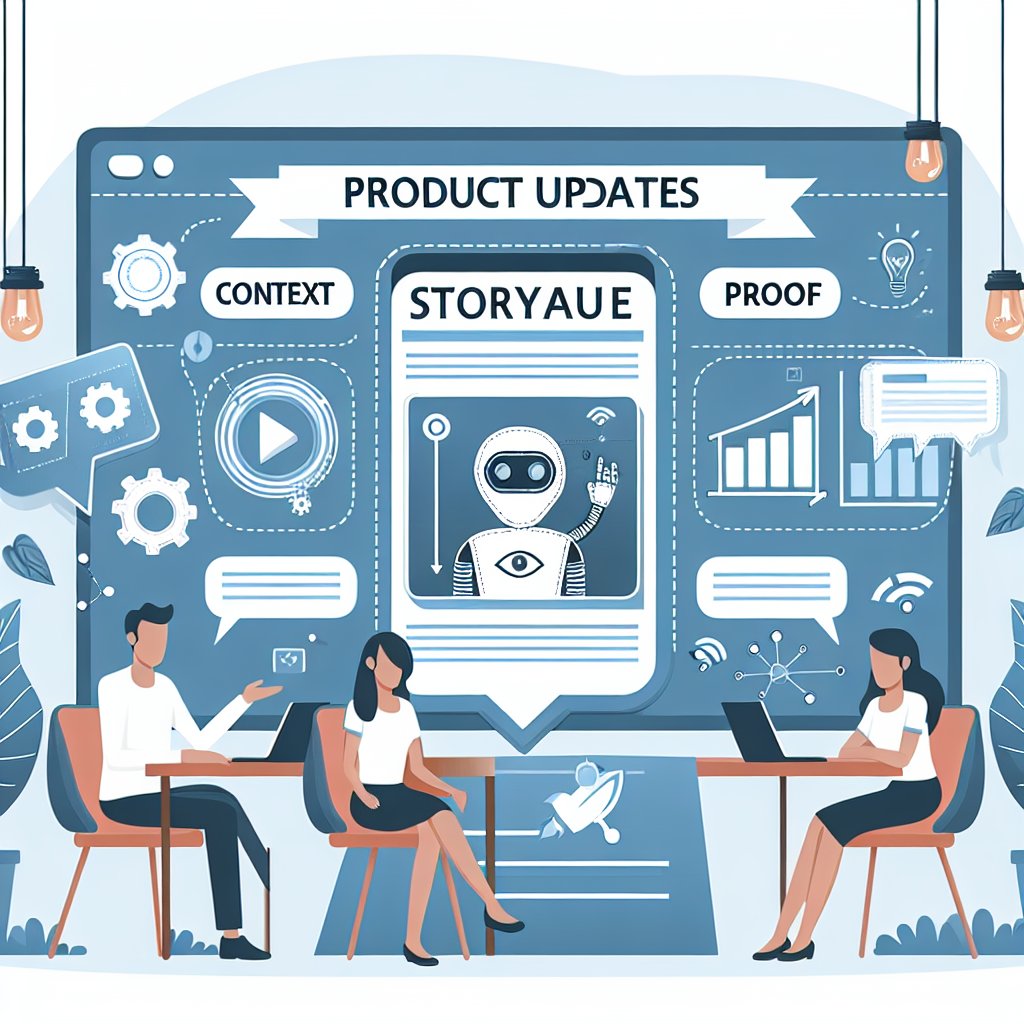


Most product updates fail because they describe what shipped, not what users should do next. This guide shows how to write announcements, improvements, and new-feature notes as a practical safety checklist that protects workflows, reduces confusion, and drives adoption.
Product updates are rarely “just communication.” They are a moment where you either protect your customers’ habits or accidentally break them. When a change lands without context, users do the most rational thing: they avoid the new thing, they open a support ticket, or they churn quietly after a few frustrating attempts.
The fix is not to write longer release notes. It is to treat every update like a user safety checklist: a clear set of “what changed,” “why we changed it,” “what you should do now,” and “what can go wrong (and how to avoid it).” This approach keeps teams honest, gives customers confidence, and turns updates into adoption instead of noise.
Shipping is a technical event. Adoption is a behavioral event. Most update announcements are written from the shipping perspective: new feature, bug fix, performance improvement. Users read from the behavioral perspective: Will this slow me down? Do I need to retrain my team? Will it break my current workflow?
When you publish “what changed” without the rest, you create three predictable outcomes:
A safety-checklist style update solves this by translating shipping events into decisions and actions.
You can standardize your announcements so every update answers the same user questions. The goal is consistency, not creativity. A good template makes it hard to publish a vague update.
Lead with a short paragraph that tells users whether they need to do anything. Example: “No action needed. Your existing settings remain the same, but you’ll notice faster load times in the dashboard.” Or: “Action recommended: update your saved reply templates because the variable format has changed.”
This one paragraph reduces anxiety and prevents unnecessary support messages.
If you can’t fill in one of these sections, the update is likely under-explained or prematurely announced.
Announcements are usually about visible changes: a new screen, a renamed button, a new workflow. The risk is not that users dislike change. The risk is that users feel surprised while trying to complete a task.
Instead of “We redesigned the Inbox,” write: “Before: you had to open each chat to see lead status. Now: lead status is visible in the conversation list, so you can prioritize follow-ups faster.”
This makes the update measurable in the user’s mind. It also reduces “Where did X go?” messages because you are describing the new location in task terms.
“Rolling out over the next 72 hours” is fine for internal teams, but users need clarity: “You may see this change starting today. If your team doesn’t see it yet, it will appear automatically within 3 days, no action needed.”
Imagine you are adding a new routing rule for inbound messages across WhatsApp, Instagram, Telegram, Facebook Messenger, and web chat. A checklist announcement would look like:
Platforms like Staffono.ai (https://staffono.ai) make this type of change especially important because automation touches revenue conversations. When you ship a new automation capability, your announcement should protect the customer’s existing lead handling flow while clearly explaining the benefit and the safe way to enable it.
Improvements are the easiest updates to undersell or oversell. “Faster,” “better,” and “more reliable” are not explanations. They are claims. Users want to know whether the improvement changes their daily experience.
Instead of “Improved performance,” use: “Search results now appear in under 1 second for most accounts, which reduces the lag when you’re looking up a conversation while a customer is waiting.”
You do not need a full case study for every update, but you can include:
If you cannot share exact numbers, describe the threshold: “Previously, some accounts experienced timeouts when exporting over 10,000 rows. Exports now complete reliably at that scale.”
If you improve how a conversation is handed from an AI agent to a human, explain it in workflow terms: “When Staffono.ai escalates a chat to a manager, the summary now includes the customer’s intent, the last three questions asked, and the recommended next reply. This reduces re-asking and shortens time to resolution.”
That description tells users what changed and how it affects real interactions, not just the underlying system.
New features cause the most confusion because users don’t have mental models yet. Your job is to get them to a first successful outcome quickly.
Every new feature has multiple possibilities, but a good update highlights one primary use case. For example: “Use the new appointment confirmation flow to reduce no-shows by automatically sending a reminder 24 hours before the booking.”
Include a short “do this now” path that takes less than 10 minutes. For example:
This is where tools like Staffono.ai are naturally relevant. Because Staffono provides 24/7 AI employees to handle customer communication, bookings, and sales across multiple channels, a new feature announcement can include a concrete “first successful use” that improves outcomes quickly, like automating booking confirmations or qualifying leads after hours.
Before you publish, ask support and sales what customers will ask. Then answer those questions inside the update. Common examples:
Answering these upfront reduces tickets and increases trust.
The best product update posts are the outcome of a disciplined release process. If you want consistent clarity, build a small internal “change brief” that every team completes before shipping:
This internal brief becomes your external checklist. It also prevents the common failure mode where engineering ships, marketing writes, and support discovers edge cases later.
Even perfect release notes fail if users never see them. The best distribution matches the moment of need:
If your customers run operations through messaging, consider delivering updates through the same channels. For example, a Staffono.ai assistant can share a brief update inside a team’s internal chat, link to the detailed note, and answer “what do I need to change?” questions instantly. That turns product updates into interactive guidance instead of one-way announcements.
Before publishing any product update, verify these items:
When you do this consistently, product updates stop feeling like marketing and start feeling like operational safety. Customers trust you more because you prove you understand their workflows.
If your team is also trying to keep up with high message volume, bookings, and lead follow-up across WhatsApp, Instagram, Telegram, Facebook Messenger, and web chat, Staffono.ai (https://staffono.ai) can help you operationalize change. With AI employees handling conversations 24/7, you can roll out new features and process improvements while keeping response times fast, capturing leads reliably, and guiding customers through what changed and what to do next.