

Product updates are not just announcements, they are adoption moments. This guide explains what changed, why it changed, and how to communicate improvements and new features so users actually notice, understand, and use them.
Most product teams ship improvements every week, but many customers only discover them by accident, or worse, through a support issue. The gap is rarely engineering speed. It is communication design. A product update is a promise: something changed, it matters, and it will make your day easier. If that promise is unclear, users ignore the update, keep doing what they used to do, and adoption stalls.
This post is a practical blueprint for writing product updates that users can follow. You will learn how to structure announcements, how to explain improvements and new features without hype, and how to connect “what changed” to “why it changed” with real user outcomes. Along the way, you will see examples you can copy, plus ways platforms like Staffono.ai can automate parts of the update workflow across messaging channels so the right users get the right message at the right time.
When users do not adopt new features, it is tempting to blame onboarding, pricing, or competition. Often the real issue is that the update was communicated like internal company news instead of user guidance.
Common failure modes include:
Staffono.ai is helpful here because it can distribute update messaging across multiple channels (WhatsApp, Instagram, Telegram, Facebook Messenger, and web chat) and handle follow-up questions 24/7 with AI employees. That makes your updates not just visible, but actionable.
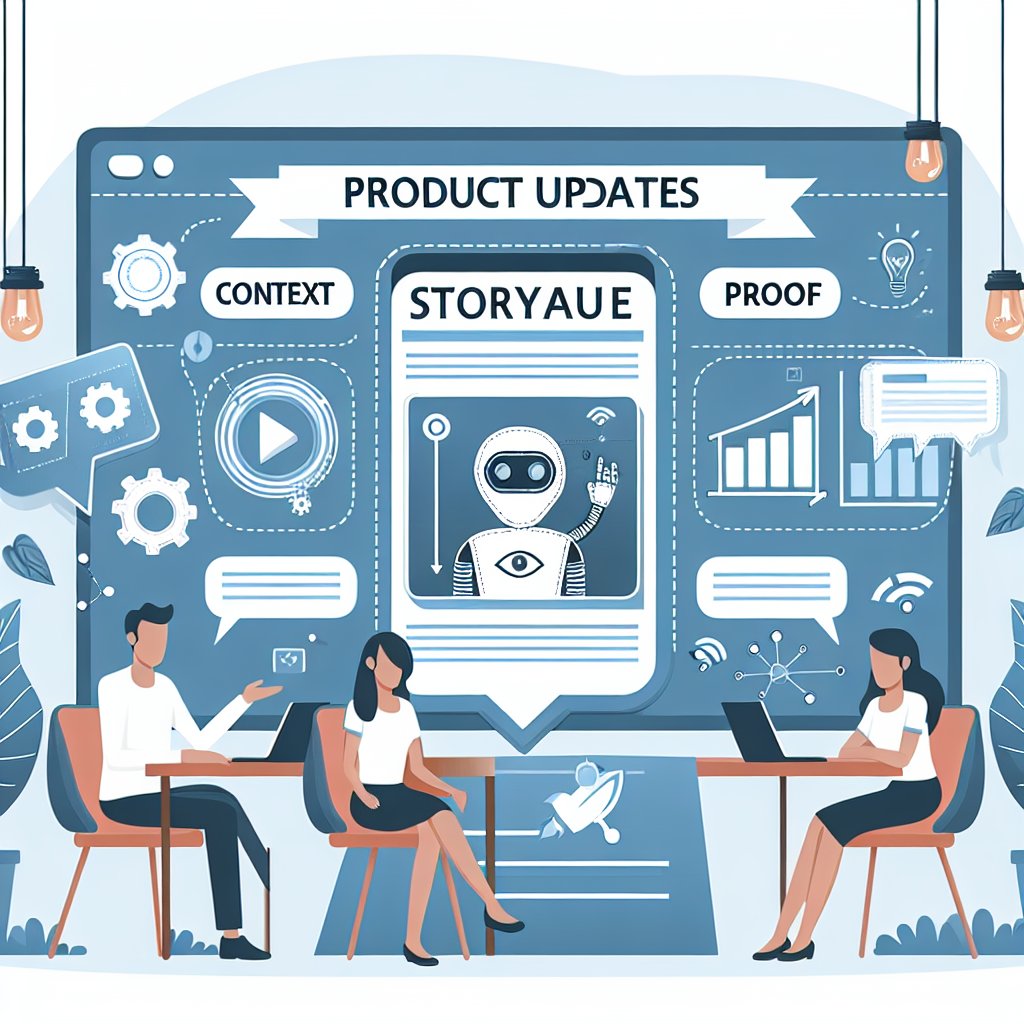
You can communicate almost any update using a three-part structure that respects a user’s time and attention.
Be specific. Avoid vague phrases like “improved performance” unless you attach a concrete outcome. Name the feature, the surface area (app page, workflow, API endpoint), and the user action affected.
Answer the user’s silent question: “Why are you touching this?” Tie the change to a problem, a request pattern, or a measurable friction point.
Tell users exactly what to do in one minute. If nothing is required, say so. If the change is optional, explain when it is worth switching.
This structure also helps support teams and sales teams. When everyone can summarize the update in three sentences, the message is consistent across email, in-app banners, and chat.
“Product update” is an umbrella term. Users interpret it based on what kind of change it is. Treat these categories differently.
Announcements create expectations and can trigger anxiety. They must be clear, calm, and complete.
Example snippet:
What changed: Team workspaces are now available on the Pro plan.
Why: Many customers asked to separate internal and client conversations without managing multiple accounts.
Next: Create a workspace from Settings. Existing data stays the same.
Improvements often sound boring, but they are what users feel daily. Communicate them in terms of time saved, fewer errors, or fewer steps.
Example snippet:
What changed: Search now returns results as you type and supports partial matches.
Why: Support tickets showed users copying full IDs to find records, which slowed down daily work.
Next: Start typing a name or ID fragment. No settings required.
New features require teaching. A feature announcement without a “first success path” is just noise.
Example snippet:
What changed: You can now create automated follow-ups after a booking.
Why: Businesses told us that no-shows and slow confirmations cost revenue.
Next: Choose a template, set timing, and activate for a service.
If your product includes messaging workflows, this is where Staffono.ai can be a strong reference point. Many companies adopt automation only when they see a clear “first win,” like confirming appointments in WhatsApp automatically or qualifying leads in Instagram DMs. Use those concrete outcomes in your update copy.
Teams sometimes avoid “why” because they do not want to reveal internal debates. But users do not need your roadmap politics. They need a reason they can trust.
Use one of these “why” patterns:
For example, if you are improving messaging automation, you can say: “We updated the conversation routing so incoming WhatsApp leads reach the correct team faster.” That is enough. You do not need to mention internal architecture. And if you use Staffono.ai, you can frame the why around business outcomes: faster response times, fewer missed leads, and a consistent experience across channels.
Most users skim. If they cannot understand the update in 10 seconds, it will not land.
Make your updates scannable:
Also avoid “we” overload. Users care about what changes for them. Replace “We are excited to announce…” with “You can now…” whenever possible.
A single changelog can exist as a source of truth, but distribution should be segmented.
Segment by:
This is a practical place to use Staffono.ai. If your customers prefer chat, Staffono can deliver a short update in WhatsApp or Instagram, then answer follow-up questions instantly, and even guide the user through setup steps. Instead of “read the docs,” users can ask, “How do I turn this on?” and get a step-by-step response in the same channel.
Headline: Fewer missed messages during peak hours
What changed: We upgraded message processing to handle higher concurrency.
Why: Some teams saw delayed replies when multiple conversations spiked at once, especially during campaigns.
What to do next: Nothing. If you monitor response time, you should see faster delivery during busy periods.
Notice how this avoids jargon and speaks to a measurable outcome: missed messages and delays.
Headline: Qualify leads automatically before a human steps in
What changed: You can now add a qualification step that asks budget, timeline, and service type in chat.
Why: Teams told us they spend too much time on unqualified inquiries and lose high-intent leads while sorting messages.
What to do next: Turn on Qualification in Settings, select the questions, and route qualified leads to sales.
If you are using Staffono.ai, this maps directly to a common automation win: AI employees can ask the qualifying questions 24/7, tag the lead, and schedule a booking, while your team focuses on closing.
Product updates should have adoption metrics, not just open rates.
Track:
A useful pattern is to pair each update with a single “success event” and a single “confusion signal.” For instance, success could be “created first automation rule,” and confusion could be “opened help article about routing.”
Users often have one question right after reading an update: “How does this apply to me?” If you rely only on static release notes, you miss the moment to help them take the next step.
Messaging-first support and onboarding changes the game. With Staffono.ai, you can turn updates into two-way conversations: send a brief announcement, offer a quick guided setup, and handle objections in real time. This is especially effective for SMBs and service businesses that live in chat and need fast answers, not long documentation.
If you want your next product update to result in real adoption, start by rewriting it with the user’s next action in mind, then deliver it in the channels where users already respond. When you are ready to automate that distribution and the follow-up Q&A across WhatsApp, Instagram, Telegram, Facebook Messenger, and web chat, explore how Staffono.ai can help you keep updates clear, timely, and tied to outcomes at https://staffono.ai.