

Most lead generation plans focus on getting more clicks, forms, and chats. The real leverage comes from answering the right buyer questions in the right order, then using those answers to qualify and convert with less friction. This guide shows a practical framework you can apply across ads, landing pages, and messaging to consistently create revenue-ready conversations.
Lead generation and sales are often treated like separate departments: marketing “brings leads,” sales “closes,” and everyone argues about quality. A more reliable approach is to design a single system around what buyers are already trying to figure out. Every lead is asking questions, even if they do not say them out loud: “Is this for me?”, “How much will it cost?”, “Will it work in my situation?”, “What happens next?”, and “Can I trust you?”
When you build your capture, qualification, and conversion process around these buyer questions, you stop chasing volume and start producing intent. You also create a smoother experience across channels like WhatsApp, Instagram, Telegram, Facebook Messenger, and web chat, where many modern leads prefer to engage. Platforms like Staffono.ai help by running these conversations 24/7 with AI employees that respond instantly, collect the right details, and route qualified opportunities to your team without losing context.
Capturing leads is not just about forms. It is about reducing the effort required for a prospect to take the next step, while increasing the clarity of what they will get in return.
Many prospects are not ready for a demo. They are ready for a specific answer. Reframe your top-of-funnel offer to match the question in their head:
These offers naturally produce better qualification data because they invite the prospect to share context. They also work well in messaging, where people prefer short, direct interactions.
If your audience lives in messaging apps, make messaging the default entry point. A web form is fine, but a WhatsApp or Instagram “message us” button often converts better because it feels like a low-commitment conversation. The key is to respond instantly and guide the lead toward a specific next step.
This is where Staffono.ai fits naturally: it can greet new inquiries on WhatsApp, Instagram, Telegram, Facebook Messenger, and web chat, then ask a small set of high-signal questions and keep the conversation moving even when your team is offline.
Generic CTAs create generic leads. Specificity filters and attracts at the same time. Add one concrete detail to your entry point:
Specificity also reduces ghosting because the prospect can immediately see progress.
Qualification works best when it is framed as assistance. Prospects share more when they believe the questions are there to help them avoid wasted time.
To qualify consistently, use four buckets that apply to almost any business:
You do not need 20 questions. You need 6 to 10 that map to these buckets.
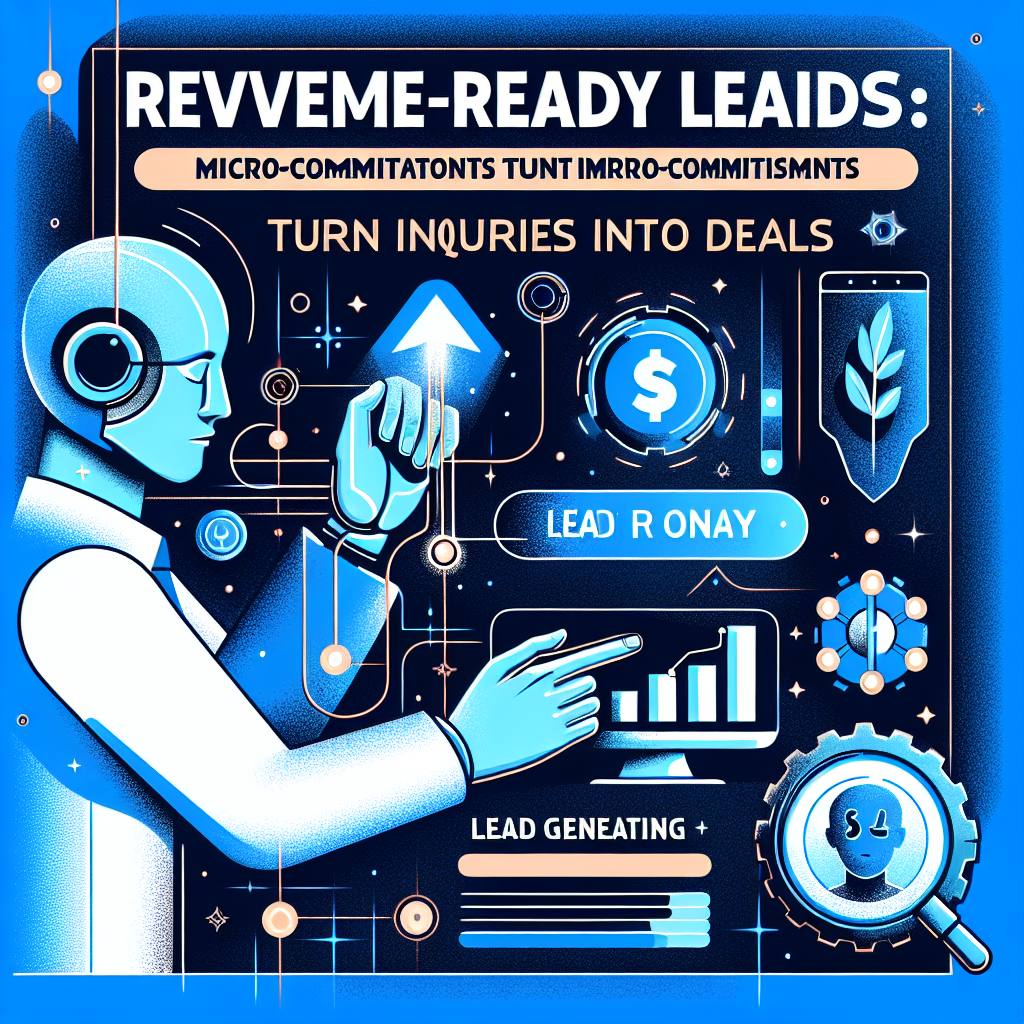
In messaging, long forms kill momentum. Replace them with micro-commitments: one question at a time, with fast reply options. For example, a home services company can qualify like this:
Each answer both qualifies and advances the deal.
Traditional lead scoring often overweights company size or job title. In practice, intent signals predict revenue better. Examples of high intent in messaging:
Use a simple score: +2 for high-intent actions, +1 for medium, 0 for browsing. Route leads above a threshold to a human quickly, and keep lower-intent leads in an automated nurture sequence.
With Staffono.ai, you can structure these questions and signals into automated flows so every lead gets the same consistent experience, while your sales team receives the conversation history and collected data for faster follow-up.
Conversion improves when you reduce decision friction. Most leads do not need persuasion, they need a clear path and confidence.
Give prospects a choice based on their readiness:
This prevents you from forcing everyone into the same funnel.
If the lead is in chat, show proof that fits chat. Instead of sending a long PDF, share:
Keep it contextual. Proof is strongest when it answers the exact question the lead just asked.
Price avoidance creates drop-offs later. Price dumping creates sticker shock. A better method is structured pricing:
Example: “Projects like this are typically $800 to $2,500 depending on size and urgency. If I ask one question, I can narrow it: how many pages do you need?”
Most revenue is won after the first conversation. The difference is whether you follow up with relevance.
If a lead stalls, it is often because one buyer question is unresolved:
Create nurture messages that resolve that specific uncertainty. For example, send a “what happens after you book” outline, or a short checklist to help them evaluate vendors.
Instead of “just checking in,” send small, useful updates:
Messaging platforms reward concise, useful communication. Staffono.ai can automate these follow-ups based on what the lead said, so the nurturing feels personal rather than broadcast.
Imagine a B2B company selling a monthly service package. Here is a simple pipeline that connects capture, qualification, and conversion:
This approach scales because the system does the repetitive work, while humans focus on high-stakes conversations.
To improve, track metrics that map to each stage:
A common pattern: improving time to first response and qualification completion produces a bigger revenue lift than increasing ad spend.
The most effective lead generation and sales tactics are not secrets. They are repeatable behaviors: answer buyer questions, reduce friction, qualify with empathy, and guide the next step. The challenge is doing it consistently across channels and time zones, especially when leads arrive after hours.
If you want a practical way to run these conversations around the clock, Staffono.ai provides AI employees that can capture leads in messaging, qualify them with structured questions, share relevant information, and book meetings or appointments while your team focuses on closing. When your pipeline is built on buyer questions and supported by automation, you get fewer dead-end chats and more revenue-ready opportunities.