
Most product updates fail not because the features are weak, but because the rollout ignores how customers actually learn and decide. This guide shows how to announce improvements and new features with clarity, timing, and measurable adoption, so users notice what changed and act on it.
Product updates are not just a record of what shipped. They are a promise that the product is improving, a moment of truth for customer trust, and a practical opportunity to reduce friction in day-to-day work. Yet most teams treat updates like a broadcast: publish a changelog, send one email, post on social, and hope users connect the dots.
The reality is more human. Customers do not wake up wanting “new features.” They want fewer steps, fewer mistakes, faster answers, and less uncertainty. The best product update communication acknowledges that attention is limited, inboxes are crowded, and every change competes with real work.
This post breaks down a modern rollout method for announcements, improvements, and new features: what changed, why it changed, and how to drive adoption without adding noise. Along the way, you will see practical examples and how automation tools like Staffono.ai (https://staffono.ai) can help you deliver updates across WhatsApp, Instagram, Telegram, Facebook Messenger, and web chat, right where customers already ask questions.
Before writing a single sentence, decide how much attention you can realistically ask from your users. A busy operations manager might give you 20 seconds. A power user might give you 2 minutes. A new trial user might only notice what appears inside the product.
Instead of starting with “Here is what we shipped,” start with “What problem did we remove?” Then map the update to a short set of outcomes users can recognize immediately.
This keeps announcements focused. It also prevents the common trap of over-explaining internal complexity, like refactors or architecture changes, that customers cannot translate into value.
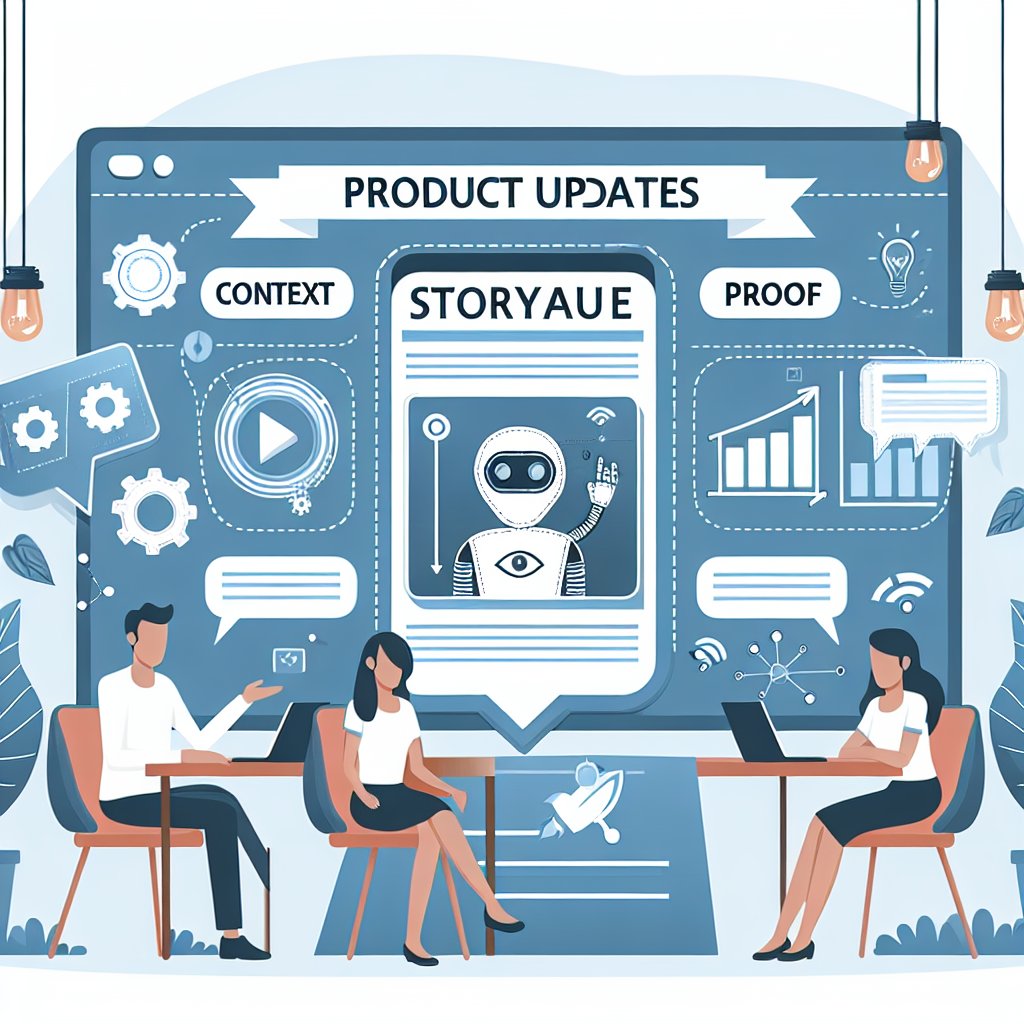
Users need different levels of detail depending on their role. A clean way to handle this is to publish the same update in three layers, so people can stop when they have enough.
One sentence that states the outcome. Example: “You can now confirm bookings in two taps from WhatsApp, with automatic customer reminders.”
Two or three bullets explaining what gets better and for whom. Example: “Less back-and-forth with customers, fewer no-shows, and clearer tracking for your team.”
A short section for people who need to implement the change, including settings, edge cases, and migration notes.
If you only publish Layer 3, your update will feel like homework. If you only publish Layer 1, support will be flooded with “How do I use this?” messages. The three-layer structure keeps both adoption and support in balance.
Not every update deserves the same megaphone. The main reason announcements feel spammy is that they are sent to everyone, even when only a small segment is affected.
Use for major changes: new pricing tiers, important security updates, large workflow improvements. Keep it short and link to details.
Use when only specific roles or industries benefit. Example: a new appointment deposit feature matters to clinics and salons, but not to SaaS teams.
Use when the best moment to learn is inside the workflow. Example: show a small tooltip the first time a user sees a new “Auto-assign” option.
This is where messaging automation becomes an advantage. With Staffono.ai, you can deliver targeted product update messages directly through the channels where customers already talk to you, and trigger them based on behavior. For example, if a customer asks “Can I reschedule via WhatsApp?” your AI employee can respond with the new capability, share a quick how-to, and link to the release note. That is a product update at the exact moment of intent.
Customers adopt what they can visualize. Instead of describing a feature in abstract terms, show how a workflow changes.
Feature description: “We added customizable qualification fields and routing rules.”
Before and after explanation:
Even if you cannot include screenshots in every channel, you can still write “Before: X. After: Y.” That single pattern makes updates clearer and more persuasive.
If you use Staffono.ai for lead capture and sales automation, you can mirror this approach in your messaging. Your AI employee can explain the new process with a short “before/after” message, then offer to guide the user through setup in the same chat. It is faster than asking users to read a long doc, and it reduces support effort.
When updates create confusion, it is often because users worry about hidden costs: extra steps, retraining, broken integrations, or losing familiar behavior. Address these concerns directly.
These answers can be a short paragraph, but they prevent long support threads. If something is changing in a way that might annoy users, be honest. A clear explanation earns more trust than a cheerful announcement that ignores the impact.
A product update is successful when behavior changes. Choose one primary action you want users to take, then measure it.
Then tie your communication to that action. A strong announcement does not end with “Let us know what you think.” It ends with a clear next step: “Turn it on here,” “Try it with your next booking,” or “Reply with your business hours and we will configure it.”
Automation can make this much easier. If you use Staffono.ai, you can design a conversation flow that guides customers from announcement to action: explain the change, confirm eligibility, collect missing info, and complete setup automatically. That turns an update into an outcome, not a notification.
Some changes should move fast. Others should be staged. A simple way to decide is to match rollout speed to the cost of a mistake.
The point is not to slow down shipping. It is to reduce surprise. A staged rollout also gives you time to learn from early users and adjust the messaging before the full audience sees it.
After you announce an update, the first 48 hours of conversations often reveal what you explained poorly. Track the questions that repeat. Those are missing lines in your announcement, missing tooltips in the product, or missing examples in your docs.
When messaging channels are a primary support surface, this insight becomes even more valuable. Staffono.ai can help by tagging update-related conversations, summarizing common questions, and surfacing patterns like “users cannot find the new setting” or “users think it is automatic when it is optional.” That feedback loop helps product and customer teams iterate quickly.
If you want a repeatable structure for announcements, use this:
Keep it short, then link to full details for the users who need them.
The best product updates feel like the product team is doing customer service at scale. They respect attention, explain impact, and guide users to a clear next step. When you treat announcements as part of the customer experience, adoption rises and support burden drops.
If you want to deliver updates where customers are most responsive, and turn “what changed” into guided action, Staffono.ai (https://staffono.ai) can help. With 24/7 AI employees across WhatsApp, Instagram, Telegram, Facebook Messenger, and web chat, you can announce improvements, answer follow-up questions instantly, and automate the setup steps that normally stall adoption. That way, every product update becomes measurable progress, not just another message in a crowded inbox.