
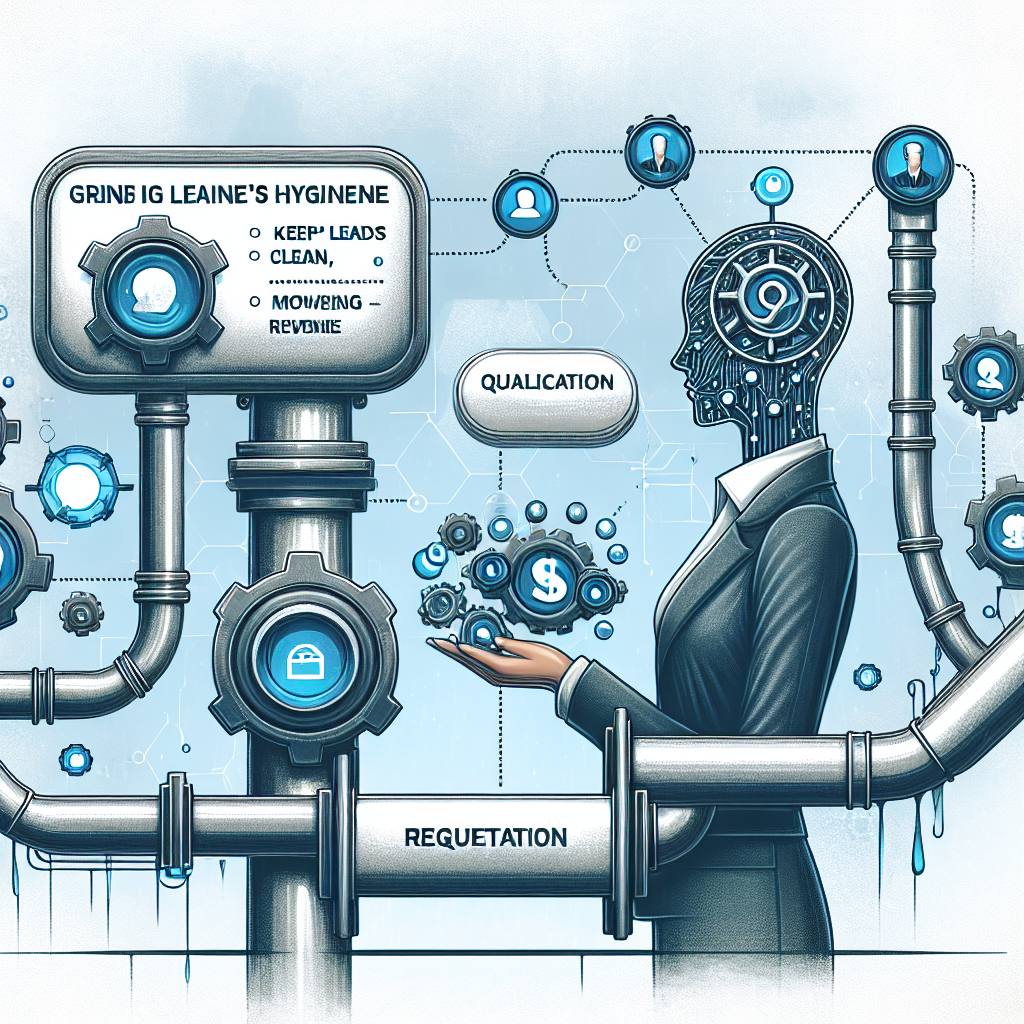
Most lead generation problems are not about volume, they are about hygiene: duplicates, stale conversations, missing context, and inconsistent follow-up. This guide shows how to capture cleaner leads, qualify them with less friction, and convert them with a sales motion that stays organized across every channel.
Many teams assume lead generation is a traffic problem: more ads, more content, more outreach. But in practice, revenue often leaks for a different reason. Leads arrive messy, conversations live in too many inboxes, qualification is inconsistent, and follow-ups happen late or not at all. The result is a pipeline that looks full but behaves empty.
Pipeline hygiene is the discipline of keeping lead data, conversation context, and next steps clean enough that your sales process can actually work. When hygiene improves, conversion rates rise without needing more spend, because fewer opportunities slip through gaps you did not know you had.
Below is a practical approach to capture, qualify, and convert leads into revenue by treating your pipeline like an operational system, not a collection of chats and spreadsheets.
Pipeline hygiene is the set of standards and automations that ensure every lead is:
If you have ever asked, “Why did this lead go cold?” or “Did anyone reply to that Instagram DM?” you are dealing with a hygiene issue, not a lead shortage.
The goal of capture is not to get a form fill at any cost. The goal is to create a low-friction entry point that still collects enough information to route the lead correctly.
High-intent prospects increasingly start with a message, not a form: WhatsApp, Instagram, Telegram, Facebook Messenger, or web chat. If your business answers slowly or inconsistently, you lose the moment when intent is highest.
Staffono.ai helps by providing 24/7 AI employees that respond instantly across channels, greeting the prospect, answering common questions, and collecting the minimum details needed to move forward. That alone improves capture rates because it prevents “silent drop-off” after the first message.
Long forms reduce lead volume and often produce low-quality data anyway. Progressive capture collects details step by step as the conversation progresses.
This approach feels natural to the buyer and still gives your sales team structured information.
Two leads can ask the same question but require different handling based on source. A referral might need white-glove outreach. An ad lead might need education. A returning website visitor might be ready to buy.
Make it a rule: every lead record must include channel, campaign, and first-touch message. When you later analyze conversion, you will know which sources create revenue, not just conversations.
Qualification is about two outcomes: confirming fit and defining the fastest next step. The mistake is treating qualification like an interrogation. The best qualification feels like help.
Build a short internal checklist your team applies to every lead. For example:
Keep it short enough to use in chat. If you need 15 fields, your process will not be followed.
Either-or questions lower friction because the buyer chooses a direction instead of composing an essay. Examples:
These questions also create segmentation you can use for follow-up sequences.
Disqualifying is not rude. It is respectful of both sides. Define triggers that move a lead to a nurture track rather than active sales. Common examples:
With Staffono.ai, these rules can be applied consistently in real time inside messaging, so your team does not spend hours on leads that cannot convert today.
Conversion is rarely about one perfect closing line. It is usually about removing uncertainty, making next steps obvious, and staying present without being annoying.
Most leads are not ready to buy immediately, but many are ready to schedule. The conversion win is often a booked call, a site visit, a demo, or a quote review.
Use a simple rule: every conversation should end with a next step and a time. “Should I send details?” is weak. “Would today at 4:00 or tomorrow at 11:00 work for a quick call?” is specific.
Staffono.ai can handle booking flows directly in chat, reducing the back-and-forth that kills momentum, and confirming appointments automatically across channels.
Prospects hesitate because they lack confidence. Create reusable assets that your team can send quickly:
The key is to match the proof to the question being asked, not to dump a brochure. In a messaging-first world, the best proof is short, specific, and timely.
Most deals are lost to “no response,” not “no.” Your follow-up should sound like help, not like checking a box. Examples:
Automated follow-ups work best when they are triggered by behavior: they asked for pricing, they clicked a link, they missed a meeting, they opened a proposal. Staffono.ai can support this by keeping conversations organized and responding instantly when a prospect comes back after days of silence.
Tactics fail when the system does not enforce consistency. These guardrails keep hygiene high even as volume grows.
A common mistake is using vague stages like “Contacted” or “In progress.” Instead, align stages to measurable events:
This makes reporting meaningful and reveals where leads stall.
Different channels create different expectations. A web form can tolerate hours. WhatsApp and Instagram usually cannot. Define standards like:
If your team cannot meet these standards consistently, automation is not optional. It is the only way to keep up with intent-driven conversations.
Duplicates are not just annoying, they damage trust. A lead who gets two different answers from two people will hesitate. Your system should unify identity across channels when possible and keep a single timeline of messages and actions.
This is another area where an AI-powered communication layer like Staffono.ai can help, by centralizing conversations and ensuring the same qualification logic is applied across WhatsApp, Instagram, Telegram, Facebook Messenger, and web chat.
Imagine a local service business that receives a WhatsApp message: “How much does it cost and when can you start?”
The sales rep steps in only when human judgment matters, already equipped with the context needed to close.
If you want predictable revenue, measure behaviors, not just outcomes. Track:
Improving one metric often lifts the rest. For many businesses, the fastest win is response time and consistent qualification.
Lead generation and sales conversion are not separate challenges. They are one operational system that starts the moment a prospect shows intent. When you keep your pipeline clean, you make it easy for leads to become customers and easy for your team to focus on the right opportunities.
If your inquiries arrive through multiple messaging channels and you want faster capture, consistent qualification, and reliable booking and follow-up, Staffono.ai (https://staffono.ai) can act as an always-on front line. It helps you respond instantly, collect the right details, route leads correctly, and keep conversations moving until they turn into revenue.