

Most product updates fail not because the work is bad, but because the message is incomplete: users hear what changed, but not what to do next. This guide shows how to structure announcements, explain the reasoning, and drive adoption across every channel without creating confusion or extra support load.
Shipping is only half the job. The other half is getting real people to notice, understand, and adopt what you shipped. That is where product updates often break down: the announcement is written like a developer note, the “why” is vague, and customers are left to guess how the change affects their daily workflow.
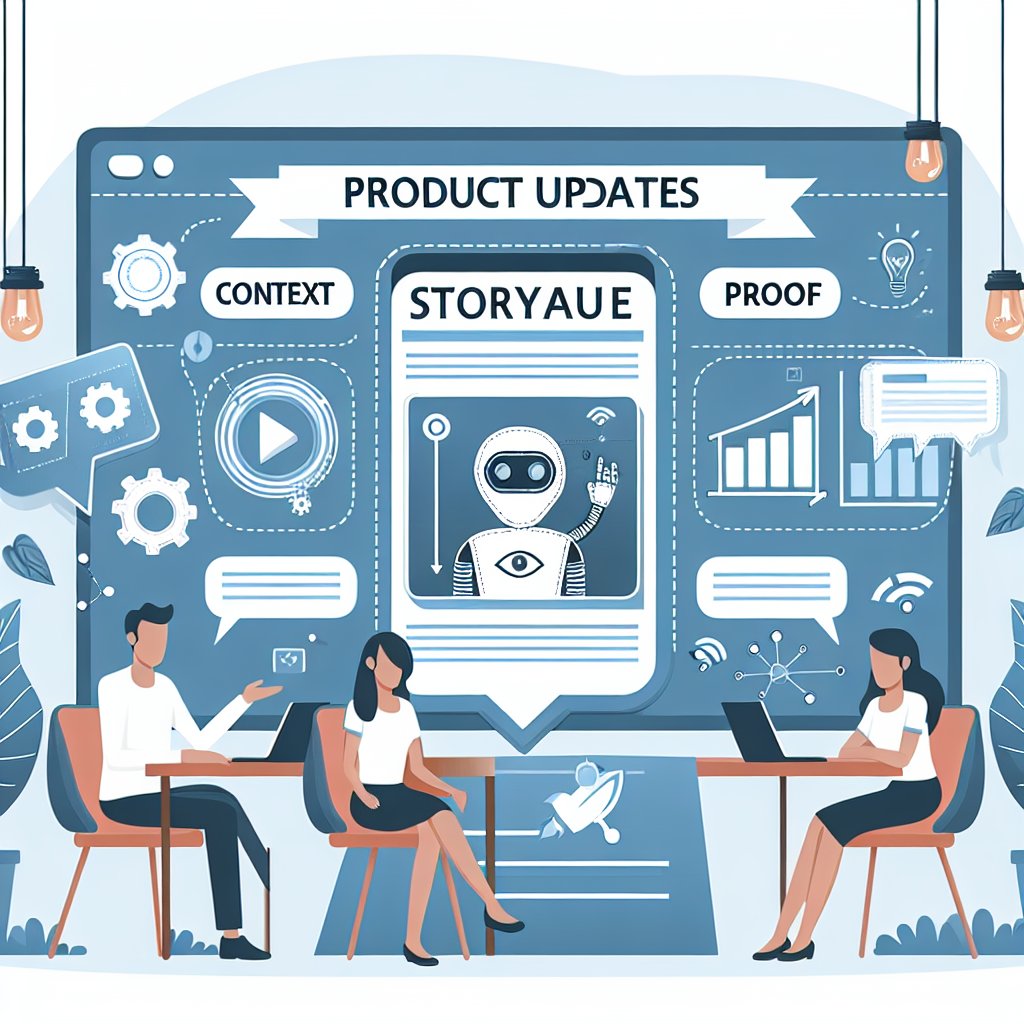
A strong update does three things at once: it clarifies what changed, it explains why it changed in customer language, and it makes the next step obvious. Think of this as a communication stack, a set of layers that turn raw release details into adoption. When you build the stack intentionally, your improvements and new features become visible, credible, and usable.
Customers do not wake up hoping to read release notes. They are trying to complete tasks: respond to leads, manage bookings, track orders, keep projects moving. A product update interrupts that routine. If you do not connect the change to their workflow, the update becomes noise, even if the feature is genuinely valuable.
Common symptoms of weak product update communication include:
These are not “product quality” problems alone. They are translation and rollout problems.
The base layer is accuracy. You need a canonical record of what shipped, when, and for whom. This is where product, engineering, and support align on facts. Keep it precise and scannable.
Even if you plan to create a more narrative announcement later, you need this “single source of truth” to prevent internal drift.
Next, convert the change into outcomes. Customers care about fewer steps, fewer errors, faster response times, more sales, fewer missed bookings. The impact statement is a short paragraph that answers: “What problem does this solve for me?”
Use a simple formula:
Example: “Before, inbound WhatsApp leads could sit unassigned for hours. Now, new messages can be auto-routed to the right team instantly, reducing response time and increasing booked appointments.”
This is also where platforms like Staffono.ai (https://staffono.ai) fit naturally into the story. If your update involves messaging, lead capture, or booking flows, you should explain how automation reduces the gap between a customer message and a completed action. Staffono.ai’s 24/7 AI employees can receive inquiries across WhatsApp, Instagram, Telegram, Facebook Messenger, and web chat, then qualify, answer FAQs, and schedule bookings. When you ship a feature that improves routing or data capture, connecting it to always-on execution makes the “why” feel concrete.
Adoption increases when the next step is frictionless. People should not have to hunt for settings or guess which workflow changed.
Keep this section practical. If the update is complex, link to a deeper guide, but still include a minimal “first success” path in the announcement.
Publishing the same long message everywhere is a common mistake. People consume updates differently depending on channel and context.
If your product is tied to messaging and lead response, speed matters. With Staffono.ai, you can also deliver the update where conversations happen. For example, your AI employee can proactively inform customers in WhatsApp or Instagram DMs about a new booking option, share a quick setup link, and answer follow-up questions instantly. That turns a passive announcement into an interactive rollout.
Users trust updates more when the rationale is clear. “Because we felt like it” does not work. “Because we listened, measured, and improved” does.
Avoid defensive language. If something changed that may cause friction, acknowledge it plainly and provide a mitigation path. Credibility comes from clarity.
What changed: “Message delivery status now updates in real time.”
Why: “Teams were double-sending replies when the status lagged. Real-time status reduces duplicate outreach and improves customer experience.”
Next step: “No setup required. Check the message timeline to see updated status indicators.”
Rollout tip: Add an in-app tooltip that appears the first time someone views the message timeline after the update.
What changed: “Customers can reschedule appointments from the confirmation message.”
Why: “Reschedule requests were coming through multiple channels and taking time to reconcile. Self-serve rescheduling reduces admin overhead and prevents no-shows.”
Next step: “Enable ‘Rescheduling link’ in booking settings and choose the allowed time window.”
Automation angle: If you use Staffono.ai, your AI employee can handle reschedule conversations end-to-end, confirm the new time, update the booking, and notify the team, even outside business hours. That is a clear, customer-visible benefit that should be stated in the update narrative, not left implied.
What changed: “The ‘Leads’ tab is now called ‘Conversations’ and includes all channels.”
Why: “Users were missing Instagram and web chat inquiries because they lived in separate views. A unified view reduces missed leads.”
Next step: “Open Conversations, then filter by channel to focus your workflow.”
Support prep: Update help docs, add screenshots, and create a one-sentence support macro: “Leads is now Conversations, same data plus more channels.”
“Shipped” is not a metric. Tie updates to adoption and outcomes. Choose a small set of indicators based on the change type.
If your update is related to communications and lead handling, you can also track “time to first response” and “conversation to booked” conversion. Staffono.ai can help close the loop by ensuring every inbound message is handled immediately and consistently, which makes it easier to attribute improvements to the change rather than to random team availability.
You do not need a giant process. You need consistent inputs and a repeatable output.
The follow-up tip is underrated. Many users need a second touch after they see the announcement once.
Announcements, improvements, and new features only create value when customers actually change behavior. The product update communication stack helps you move from “we shipped” to “customers adopted,” without adding noise or confusion.
If your business depends on fast, reliable customer communication, consider pairing your updates with automation that makes the new workflow real in every conversation. Staffono.ai (https://staffono.ai) can act as your always-on front line across WhatsApp, Instagram, Telegram, Facebook Messenger, and web chat, answering questions about what changed, guiding users through the new steps, and converting inquiries into bookings or sales while your team focuses on higher-leverage work. When you are ready to turn product updates into measurable outcomes, Staffono.ai is a practical place to start.