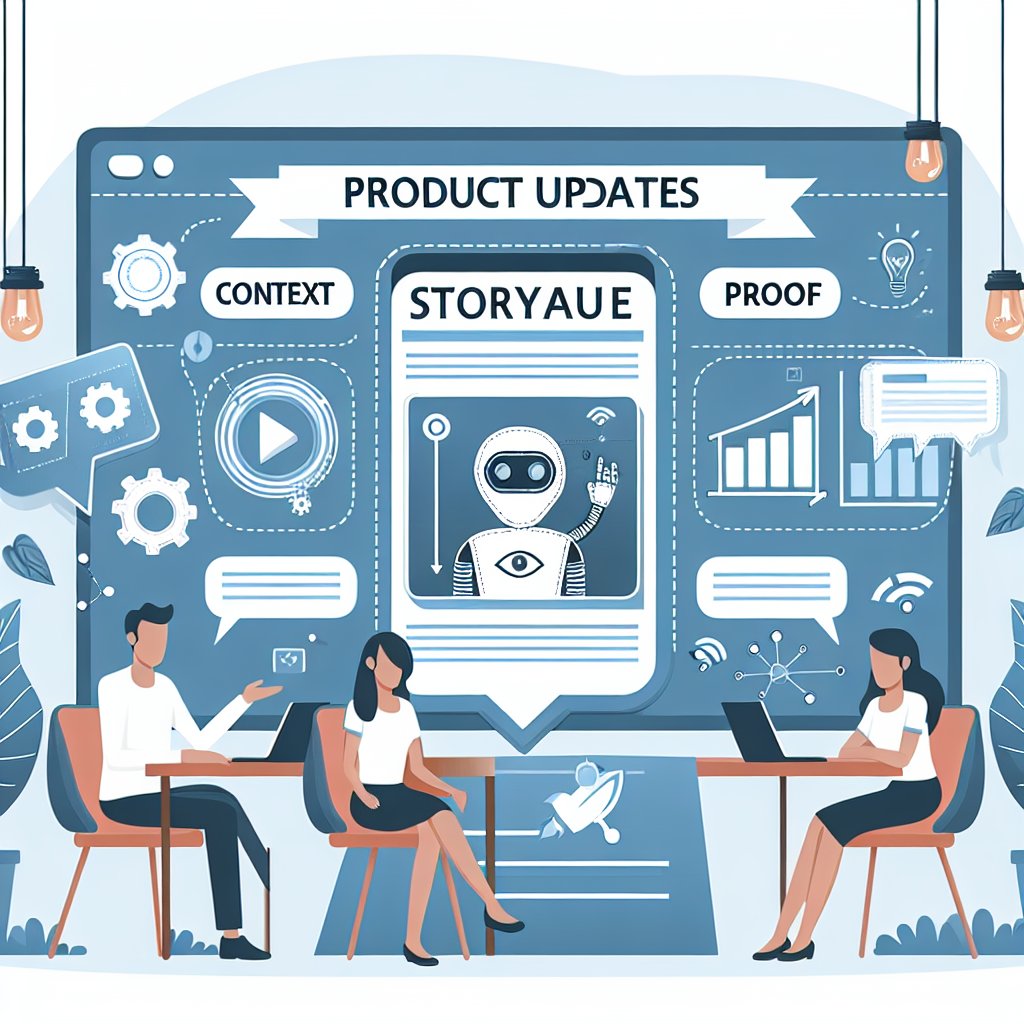


Product updates fail when everyone receives the same message, at the same time, with the same level of detail. This briefing-style approach helps you announce what changed and why, while giving each audience the right depth, timing, and next step.
Most teams think the hard part of product updates is building the feature. In reality, the hardest part is making the change land well across different audiences: customers who just want their workflow to keep working, support teams who need to prevent ticket spikes, and sales teams who need a clear story they can repeat without improvising.
A single “release notes” post rarely does the job. Some readers want a one-line summary. Others need screenshots, migration steps, and edge cases. And executives want to understand the reason behind the change: what problem it solves, what risk it reduces, and what it unlocks.
The solution is to treat every product update like a briefing: a structured package that includes the announcement, the rationale, and the operational details, then routes each layer to the right people. Done well, this approach reduces confusion, increases adoption, and helps your company benefit from the update faster.
“What changed and why” is a strong foundation, but it is still incomplete. The missing piece is “for whom,” because different groups interpret the same change differently.
When you publish one generic update, you force everyone to do interpretation work. That interpretation becomes inconsistent messages, longer onboarding, and more tickets. A briefing removes that burden.
Use a consistent structure so customers and internal teams know where to find what they need. The goal is not longer writing, it is better packaging.
One to two sentences that state the change and the immediate benefit. Avoid product jargon. Assume someone is reading on a phone between meetings.
Example: “You can now confirm bookings directly from WhatsApp messages. This reduces back-and-forth and locks in appointments faster.”
Explain the problem the update solves in plain language. Anchor it to a real scenario, not a technical capability.
Example: “Previously, customers asked for availability in chat, then had to switch to a link or call to confirm. Now the confirmation happens inside the conversation, so fewer leads drop off.”
Be precise. List what is new, what is improved, and what is removed. If there is any behavior change, call it out with clarity.
Most updates should answer: “Do I need to do anything?” If the answer is no, say so. If yes, provide steps and an expected time to complete.
Example: “Admins: review your confirmation template and add your cancellation policy line. Estimated time: 5 minutes.”
This is where you prevent anxiety and ticket spikes.
This layer is rarely needed by every user, but it is essential for trust and operational stability.
What changed: The “Leads” tab is now “Conversations,” and filters moved to the top right.
Why: Users were treating leads and conversations as separate objects, which caused missed follow-ups. Unifying the area reduces duplicate work and makes message history easier to find.
Briefing action: Add a 15-second GIF showing where the filters moved, plus a support note: “If you used saved filters, they are now under ‘Views’.”
What changed: Message delivery retries are smarter and reduce failures during carrier hiccups.
Why: Customers care about reliability, not retry algorithms. This improves conversation continuity and reduces missed confirmations.
Briefing action: Report impact metrics: “Delivery failures reduced by 28% in the last 30 days.” Add a short line: “No action required.”
What changed: An older API endpoint is deprecated, with a 60-day migration window.
Why: The new endpoint supports better security and higher throughput.
Briefing action: Provide a migration checklist, a compatibility table, and a reminder schedule at 45, 30, and 7 days. Include a support escalation path for high-volume customers.
Once you have layers, you can distribute them without rewriting everything from scratch.
This is where automation helps. If your customers live in messaging channels, you can deliver brief updates in the same place they already communicate.
For example, Staffono.ai (https://staffono.ai) helps businesses run customer communication across WhatsApp, Instagram, Telegram, Facebook Messenger, and web chat with 24/7 AI employees. That same always-on messaging infrastructure can be used to deliver update summaries, answer “what changed?” questions instantly, and route complex cases to a human when needed.
Before you publish, ask support and success to predict the most common questions. Add answers directly into the briefing. If you do this consistently, your ticket volume drops simply because you removed uncertainty.
People learn change through contrast. Include one short scenario that shows the previous workflow and the new one.
Example: “Before: customers asked for availability, then waited for a link. After: the AI confirms the slot inside the chat and sends a calendar invite.”
Every update should have one adoption metric and one quality metric.
When you publish “what changed,” include the success signal so teams know what “good” looks like.
If the change introduces risk, set a conservative default and allow opt-in. This reduces fear and preserves trust, especially for admins.
Static announcements are easy to ignore. Conversations are harder to ignore, and easier to personalize. With AI, product updates can become interactive guidance: users ask a question in chat, get an answer tailored to their plan, permissions, and configuration, and then complete the next step immediately.
Staffono.ai can support this approach by acting as a frontline “release concierge” inside the channels your customers already use. Instead of forcing users to search a help center, Staffono’s AI employees can answer common update questions, share the correct snippet of documentation, and even collect feedback like “This change broke my workflow” with context that your team can act on.
This matters most right after a release, when curiosity and confusion peak at the same time. An always-on assistant reduces response delays and keeps customers confident.
Keep the template consistent across releases. Consistency is a form of usability.
Product updates should not feel like surprises. They should feel like well-managed change. A briefing approach helps you communicate what changed and why, while also packaging the right depth for each audience. It makes your release more adoptable, your support team calmer, and your sales narrative sharper.
If your customers engage with you primarily through messaging, consider making updates conversational instead of purely broadcast. Staffono.ai (https://staffono.ai) can help you deliver clear update summaries across WhatsApp, Instagram, Telegram, Facebook Messenger, and web chat, answer questions 24/7, and route the few truly complex issues to your team. The result is fewer “what happened?” messages and more customers actually using what you built.