
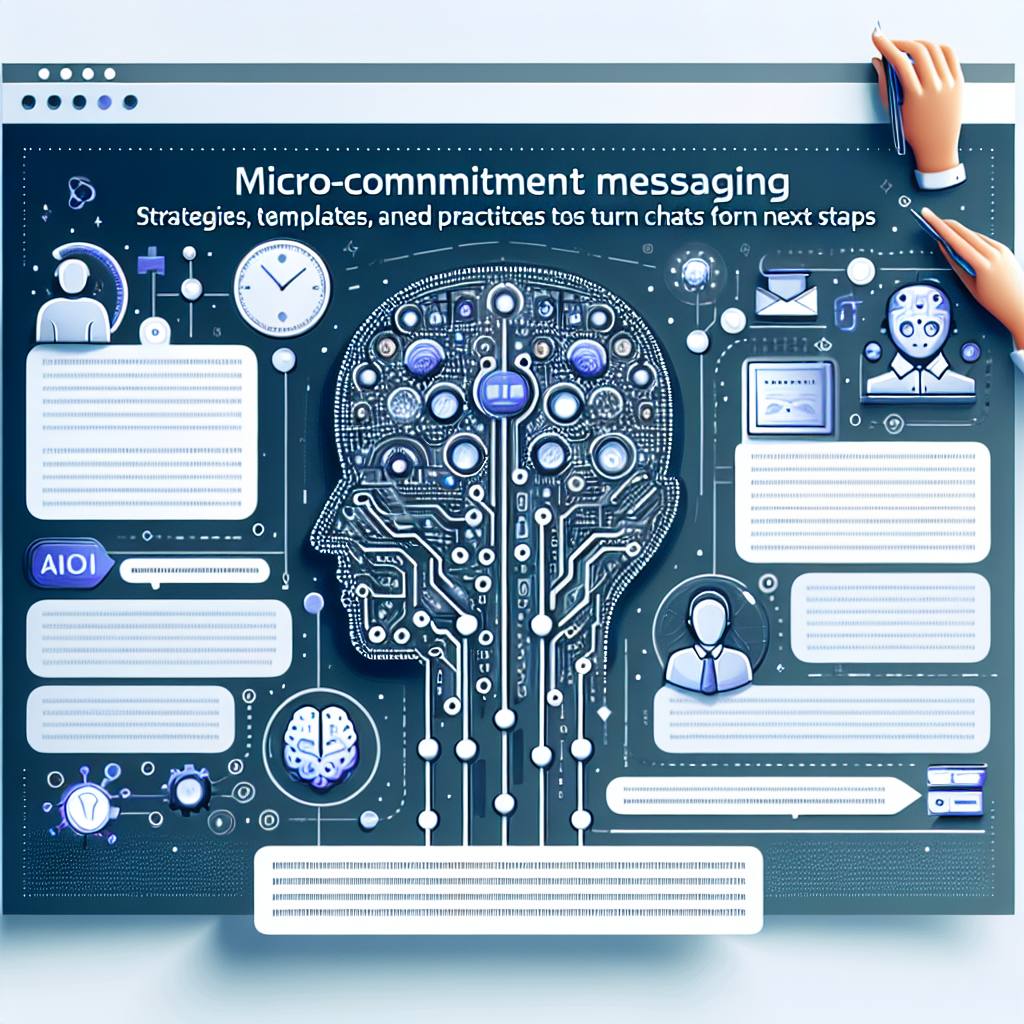
Most customer conversations fail not because the offer is wrong, but because the message asks for too much, too soon. This guide shows how to design micro-commitments, tiny, low-friction steps that keep customers moving, with practical templates you can deploy across WhatsApp, Instagram, web chat, and more.
Customer messaging is not a single moment, it is a sequence of decisions. The fastest way to increase replies, bookings, and sales is to stop asking customers for big leaps (like “schedule a demo” or “buy now”) and instead guide them through micro-commitments: tiny, easy next steps that feel safe, clear, and reversible.
Micro-commitment messaging works across channels because it matches how people behave in chat. They scan, they hesitate, they ask one question, and they want to feel in control. Your job is to reduce cognitive load, offer a simple next step, and keep momentum without sounding pushy.
A micro-commitment is a small action that moves the conversation forward with minimal effort. Examples include choosing between two options, confirming a detail, sharing a preference, or reacting with a simple yes/no. Each micro-commitment should do two things: increase clarity and increase readiness for the next step.
Instead of: “Can you fill out this long form?” try: “Want to answer 2 quick questions so I can point you to the right option?” The second message protects the customer’s time and sets expectations.
Every message should have one primary purpose. If you mix tasks (explain pricing, ask for details, and push a booking link) you increase drop-offs. Choose one job per message: clarify need, qualify fit, propose an option, or confirm logistics.
Open-ended questions can be useful, but they often create silence. Two-choice prompts lower the effort required to respond and increase reply rate.
Customers resist when they feel controlled. A simple permission phrase plus a benefit makes the next step feel collaborative.
Messaging improves when you reflect what you heard. This reduces misunderstandings and makes the customer feel seen.
People commit when they feel safe. Use language that keeps agency with the customer.
The first reply should do three things: acknowledge, set a tiny path forward, and give a time expectation if needed. Avoid long intros. In chat, speed and clarity beat polish.
Template: First reply with micro-commitment
“Thanks for reaching out. I can help with that. Quick question: is this for today or later this week?”
Template: First reply with menu (when many requests come in)
“Happy to help. Which one do you need?
1) Pricing
2) Availability
3) Setup help
Reply with 1, 2, or 3.”
Qualification should feel like assistance, not interrogation. Ask only what you need to recommend the next step. If you need multiple details, ask in a short sequence and explain why.
Template: Two-question qualifier
“To point you to the best option, two quick questions:
1) What’s the main goal: more leads or faster bookings?
2) Which channel matters most: WhatsApp or Instagram?”
Template: Budget without awkwardness
“So I don’t waste your time with the wrong tier, are you aiming under $X or are you flexible for a better fit?”
Customers do not want more information, they want less risk. Present one recommended option and one alternative. Tie each to the customer’s stated goal.
Template: Recommendation with choice
“Based on what you shared, I’d start with Option A because it covers X and Y. If you want Z as well, Option B is better. Which direction should I price out for you?”
When a customer says “Sounds good,” your next message should be a micro-commitment, not a wall of instructions. Ask for one confirmable item, then provide the link or next action.
Template: Close to booking
“Great. Do you prefer morning or afternoon? I’ll send the closest available time.”
Template: Close to payment
“Perfect. Want the invoice sent to this number or a different email?”
Follow-ups work when they add value: a reminder, a new option, or a simplified decision. Avoid “Just checking in.” Instead, give a fresh micro-commitment.
Template: Follow-up with a smaller ask
“Should I keep this open for you, or close it for now? Reply keep open or close.”
Template: Follow-up with new info
“Update: I have one slot left at 4:30 PM today. Want me to reserve it?”
“Pricing depends on what you need. Are you looking for the basic option or the all-in setup? If you tell me which, I’ll send the exact numbers.”
“Totally fair. What’s the main thing you want to be sure about: price, timing, or fit? If you tell me which, I can clarify in one message.”
“Quick one: should I keep working on this for you, or pause for now?”
“Thanks for the message. We’re offline right now, but I can still help you get started. Are you trying to book or ask a question?”
Micro-commitments are simple, but consistency is hard when you are juggling channels and peak hours. Staffono.ai (https://staffono.ai) provides 24/7 AI employees that can handle customer communication across WhatsApp, Instagram, Telegram, Facebook Messenger, and web chat, while keeping your messaging consistent and goal-driven.
For example, instead of letting leads sit overnight, a Staffono AI employee can respond immediately, ask the first micro-commitment question, qualify intent, and route high-intent conversations to your team with a clean summary. That means fewer missed opportunities and fewer repetitive manual replies.
Staffono.ai can also support booking and sales flows by collecting the right details step by step, confirming information, and triggering follow-ups that feel helpful rather than spammy. Because every message is designed around a small next step, your pipeline keeps moving even when your human team is offline.
Pick one customer journey (for example, “IG DM to booked appointment”) and rewrite it as five micro-commitments: first reply, qualifier, recommendation, close, and follow-up. Then track two metrics for seven days: reply rate and time to next step. You will usually see improvements without changing your offer, only the way you guide decisions.
If you want a faster rollout across multiple channels, Staffono.ai (https://staffono.ai) can help you deploy AI employees that apply these micro-commitment patterns consistently, keep conversations moving 24/7, and turn everyday chats into measurable bookings and revenue.