
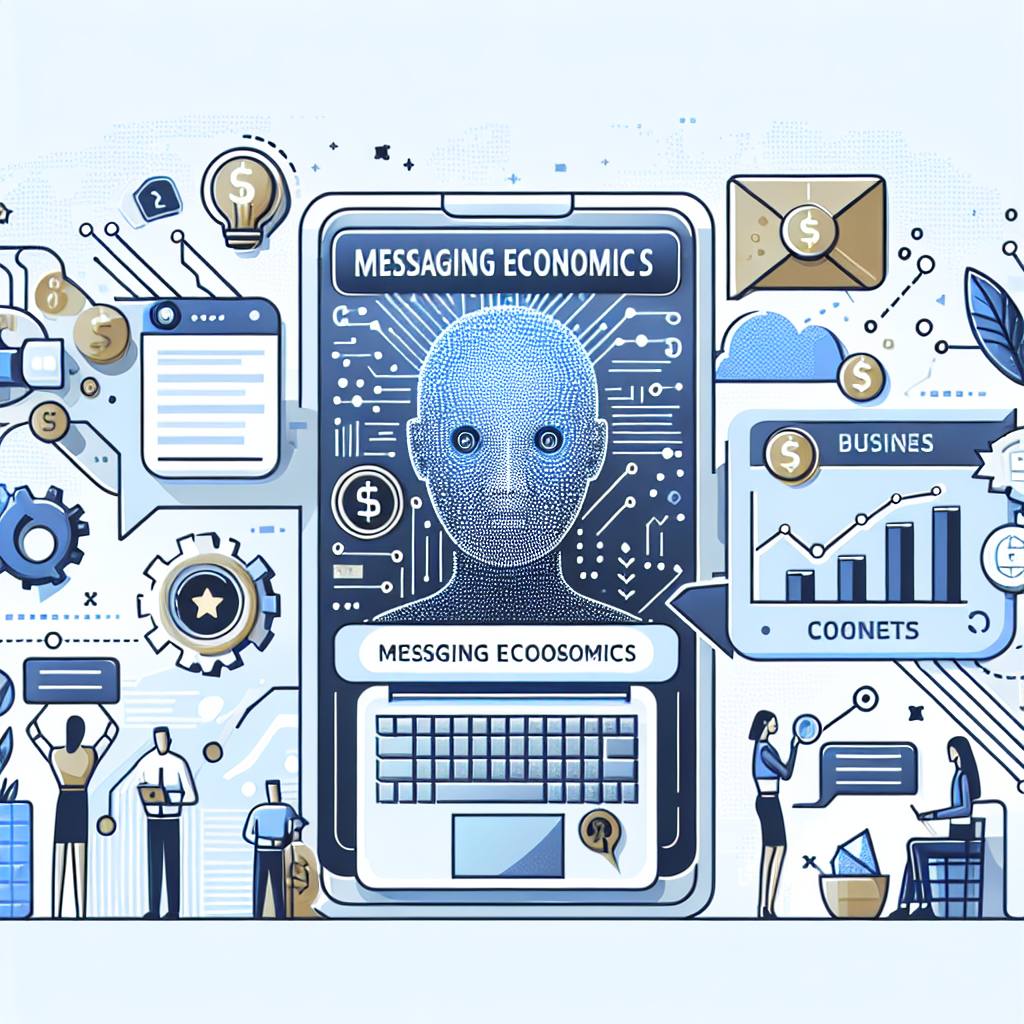
Customer messaging is not just “being responsive”, it is a controllable cost center and a measurable growth lever. This guide shows how to design messages that reduce back-and-forth, prevent escalations, and move customers to confident decisions, with ready-to-use templates and practical best practices.
Most teams treat customer messaging as an art: write nicely, respond quickly, be polite. But messaging also has economics. Every extra clarification costs time. Every vague answer creates another follow-up. Every unanswered message increases churn risk. And every conversation that ends without a clear next step is a hidden revenue leak.
When you look at messaging through an economic lens, the goal becomes simple: reduce the number of messages required to reach a good outcome, while improving the customer’s confidence at each step. That means fewer escalations, lower support load, higher booking rates, and faster sales cycles.
In this article, you will find strategies, templates, and best practices you can apply across WhatsApp, Instagram, Telegram, Facebook Messenger, and web chat, plus examples of how AI automation can make these improvements consistent at scale. Platforms like Staffono.ai help teams deploy 24/7 AI employees that keep conversations moving, answer FAQs, qualify leads, and book appointments across channels, without losing your brand voice.
If you want better messaging, measure it like a business system. Start with a few metrics you can track from chat logs or your helpdesk:
Even small improvements pay off. If you reduce the average conversation by two messages at scale, you save time and increase throughput. If you reduce ambiguity, you prevent rework. If you increase clarity around next steps, you increase conversions.
Back-and-forth happens when your reply forces the customer to ask another question. The fastest teams “bundle” what customers usually need next.
For most customer messages, structure your response like this:
Example (shipping question):
“Yes, we deliver to Gyumri. Delivery takes 1 to 2 business days, and you can choose morning or evening time windows. If you share your address, I can confirm the exact fee and schedule the delivery.”
This format consistently lowers “messages to resolution” because it anticipates the next question.
Open questions create work. Option sets create momentum.
Open: “When would you like to come in?”
Option set: “Would you prefer today after 4pm or tomorrow between 11am-2pm?”
Option sets are especially effective for booking, lead qualification, and troubleshooting. They also work well in messaging apps where customers want quick taps and short replies.
Templates are not the problem. “Template voice” is the problem. Strong templates are specific, flexible, and designed for common outcomes.
Teams often store templates in a document that no one updates. A better approach is to treat templates like product assets: reviewed monthly, tested, and improved based on real chat outcomes. With Staffono.ai, templates and flows can be deployed across channels consistently, while the AI employee adapts to the customer’s context and keeps the tone aligned with your brand.
Different stages require different messaging objectives. Here are practical strategies and templates you can reuse.
Goal: confirm you understood, set expectations, and move toward a clear intent.
Best practices:
Template:
“Thanks for reaching out, {name}. I can help with that. Are you looking to {common intent A} or {common intent B}? If you tell me which one, I’ll guide you to the next step.”
Goal: identify fit without interrogating.
Best practices:
Template:
“To recommend the right option, I need one detail: is this for {use case 1} or {use case 2}? Once I know that, I can share pricing and the fastest setup.”
Goal: reduce sticker shock and ambiguity.
Best practices:
Template:
“For {goal}, the most common plan is {plan} at {price}. It includes {3 inclusions}. If you need {advanced need}, {next plan} is {price}. Want me to recommend the best fit based on your volume?”
Goal: identify the real blocker and provide proof.
Best practices:
Template:
“That makes sense. When you say ‘too expensive’, is it about monthly budget, or not being sure it will work for your case? If you tell me which one, I can share the most relevant example and a smaller starting option.”
Goal: make scheduling effortless.
Best practices:
Template:
“I can book that for you. Do you prefer {time option 1} or {time option 2}? It takes {duration}. After you choose, I’ll send a confirmation and a quick reminder.”
Staffono.ai is built for this exact workflow: an AI employee can offer time slots, confirm details, and create bookings automatically across WhatsApp, Instagram, Telegram, Messenger, and web chat, so your team is not stuck in scheduling loops.
Goal: get to diagnosis quickly and prevent escalation.
Best practices:
Template:
“I can help you fix this. First, are you using iOS or Android? Then try these steps: (1) {step} (2) {step} (3) {step}. If it still happens, reply with a screenshot and I’ll escalate it to a specialist.”
The fundamentals stay the same, but execution changes by channel.
With Staffono.ai, you can keep the same core playbooks while adapting the tone and interaction style per channel, so customers get a consistent experience without copy-pasting.
Organize templates by intent: pricing, booking, rescheduling, refunds, onboarding, troubleshooting, and objections. Add notes about when to use each template and what data to collect.
Pick 20 conversations and look for patterns:
Then update templates and routing rules.
If you want results in two weeks, follow this sequence:
If your team is handling multiple channels and the volume is growing, automation becomes the multiplier. An AI employee from Staffono.ai can respond instantly 24/7, apply your approved templates and tone, qualify leads, answer FAQs, and book meetings without delays, while still handing off to humans when the situation needs nuance.
Better messaging is not a copywriting upgrade. It is a cost reduction strategy and a revenue strategy at the same time. When each reply answers the question, prevents the next question, and guides a clear next step, customers feel taken care of and your team gets time back. If you want to turn those principles into a system across WhatsApp, Instagram, Telegram, Messenger, and web chat, Staffono.ai is a practical place to start.