
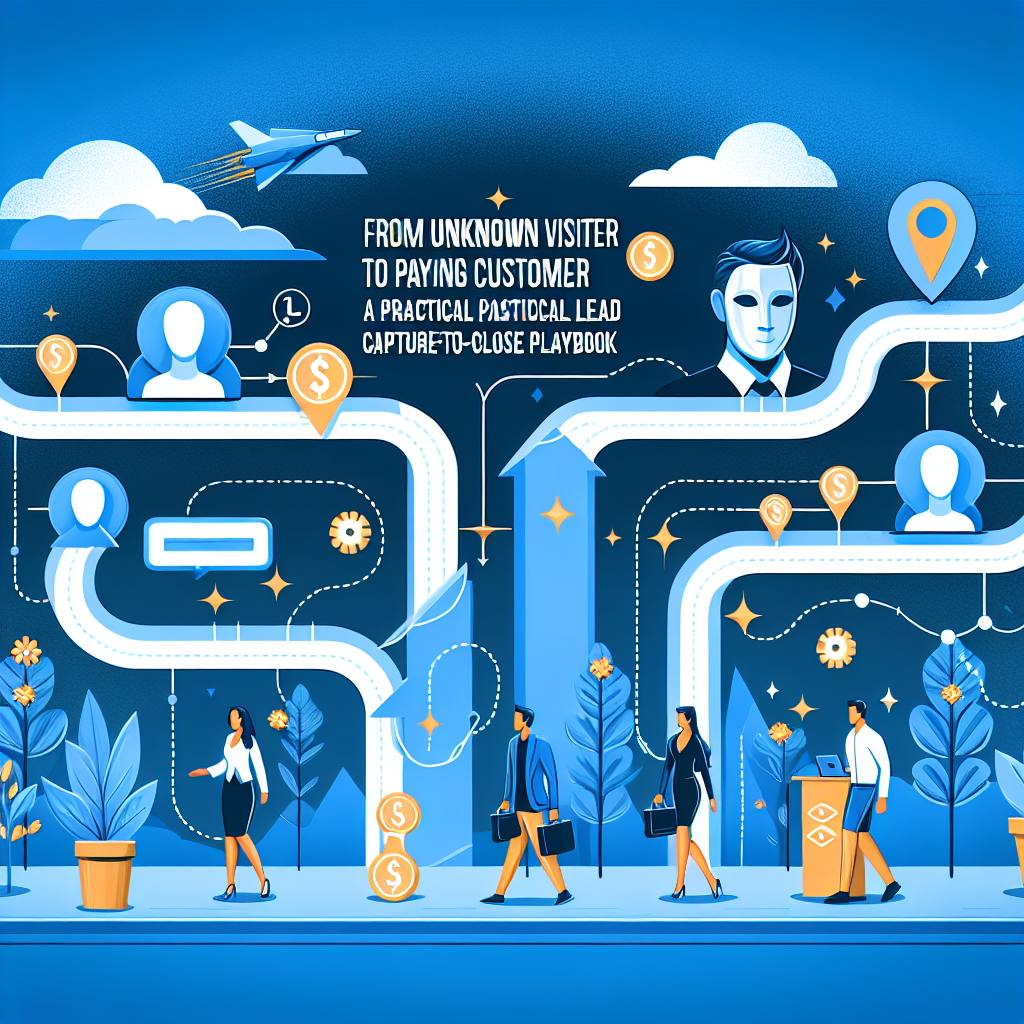
Lead generation is not a single campaign, it is a repeatable system that turns attention into conversations, conversations into qualified opportunities, and opportunities into revenue. This guide breaks down the exact tactics to capture, qualify, and convert leads across messaging, forms, and follow-ups without adding headcount.
Most teams treat lead generation like a marketing problem and sales like a closing problem. In reality, revenue is created (or lost) in the handoffs: how quickly you respond, how you qualify, how you route, and how consistently you follow up. If a lead has to wait, repeat themselves, or jump through hoops, your competitor gets the deal.
This playbook focuses on building a simple, measurable path from first interest to paid customer. It is channel-agnostic (web, WhatsApp, Instagram, Messenger, Telegram, referrals, events) and built around tactics you can implement this week, plus automation patterns that scale when volume increases.
Before tactics, define the “lead journey” in plain steps. You need a shared definition across marketing and sales so you can improve the same process.
Keep it simple. Complexity hides problems. If you cannot explain your stages in 30 seconds, your team cannot run them consistently.
These three metrics usually reveal where the leak is: slow response, weak qualification, or inconsistent follow-up and next steps.
Capturing leads is less about “more traffic” and more about reducing friction at the moment someone is ready to ask. Your job is to be present, specific, and easy to reach.
Forms are fine, but many buyers prefer messaging because it feels faster and less committal. Add click-to-message buttons across high-intent pages: pricing, services, case studies, and contact.
Staffono.ai (https://staffono.ai) helps you capture leads across these channels with 24/7 AI employees that greet, answer FAQs, and guide prospects into the next step, even when your team is offline.
People hesitate when the next step feels heavy, like “Book a 60-minute demo.” Replace that with a lighter first action:
These small asks increase conversions because they match how buyers behave: they want clarity before commitment.
Instead of generic ebooks, create assets that help a buyer decide. Examples:
Pair the asset with a conversation that captures context: timeline, budget range, and key requirements.
Qualification should not feel like an interrogation. The best qualification feels like customer service: you are guiding them to the right option, even if that option is not you.
Use a short set of questions that map to your ICP. Here are examples that work across industries:
Then add one “disqualifier” question that saves time. Example: “Do you have a minimum monthly budget range in mind?” If you do not want to ask directly, anchor with packages: “Most clients start at $X-$Y. Is that in range?”
You do not need complex lead scoring to win. Start with a 0-10 score:
Decide actions:
With Staffono.ai, you can automate this early qualification in messaging, tag leads by score or category, and hand off the context to your sales team so they do not start from zero.
Most deals are not lost because the product is wrong. They are lost because the next step is unclear or delayed. Your job is to move the lead forward with momentum.
Instead of “When are you free?”, offer two options: “I can do today at 4:00 PM or tomorrow at 11:00 AM. Which works?” This reduces back-and-forth and increases booking rate.
Confirmation messages should reduce anxiety and increase show rate:
Example: “In 15 minutes we will confirm requirements, share a price range, and outline next steps. If you can, bring your current provider details.”
Common objections (price, timing, “send info”) can be addressed with short scripts:
When handled well, objections become signals that help you tailor the offer.
Most revenue is in the follow-up, but most follow-up is either inconsistent or annoying. The fix is to connect each follow-up to a reason.
Each message should include one clear action: reply with a choice, book a time, or answer one question.
Staffono.ai can run these sequences across WhatsApp, Instagram, Messenger, Telegram, and web chat, keeping tone consistent and logging outcomes so your team knows what happened before they jump in.
Capture: click-to-WhatsApp “Check availability”. Qualify: location, service type, preferred time, budget range. Convert: propose two appointment slots and collect a deposit link if applicable. Follow-up: if no booking, send one helpful message: “Want the soonest slot or the best price slot?”
Capture: “Get a ballpark quote” chat on pricing page. Qualify: company size, use case, current tools, timeline. Convert: book a 20-minute discovery call with an agenda. Follow-up: send a tailored one-pager based on their answers, not a generic deck.
Capture: Instagram DM keyword for product questions. Qualify: intended use, size/fit, shipping destination. Convert: share product recommendation with link and time-limited incentive. Follow-up: cart reminders plus “Need help choosing?” message.
Decide your 3-5 qualification questions and your scoring rule. Keep it short and useful.
Update buttons and bios. Make the promise specific: pricing, availability, or fit check.
Templates should sound human and be easy to personalize.
Even partial automation improves speed-to-lead dramatically. If you want to capture and qualify leads around the clock, Staffono.ai (https://staffono.ai) can act as an always-on front desk and sales assistant, collecting details, scoring intent, booking meetings, and handing off clean context to your team.
When your capture, qualification, and conversion steps are designed as one system, lead generation stops being a constant scramble. It becomes a predictable pipeline where every inquiry gets a fast, helpful response, every qualified lead gets a clear next step, and your team spends time where it matters most: closing the right deals.