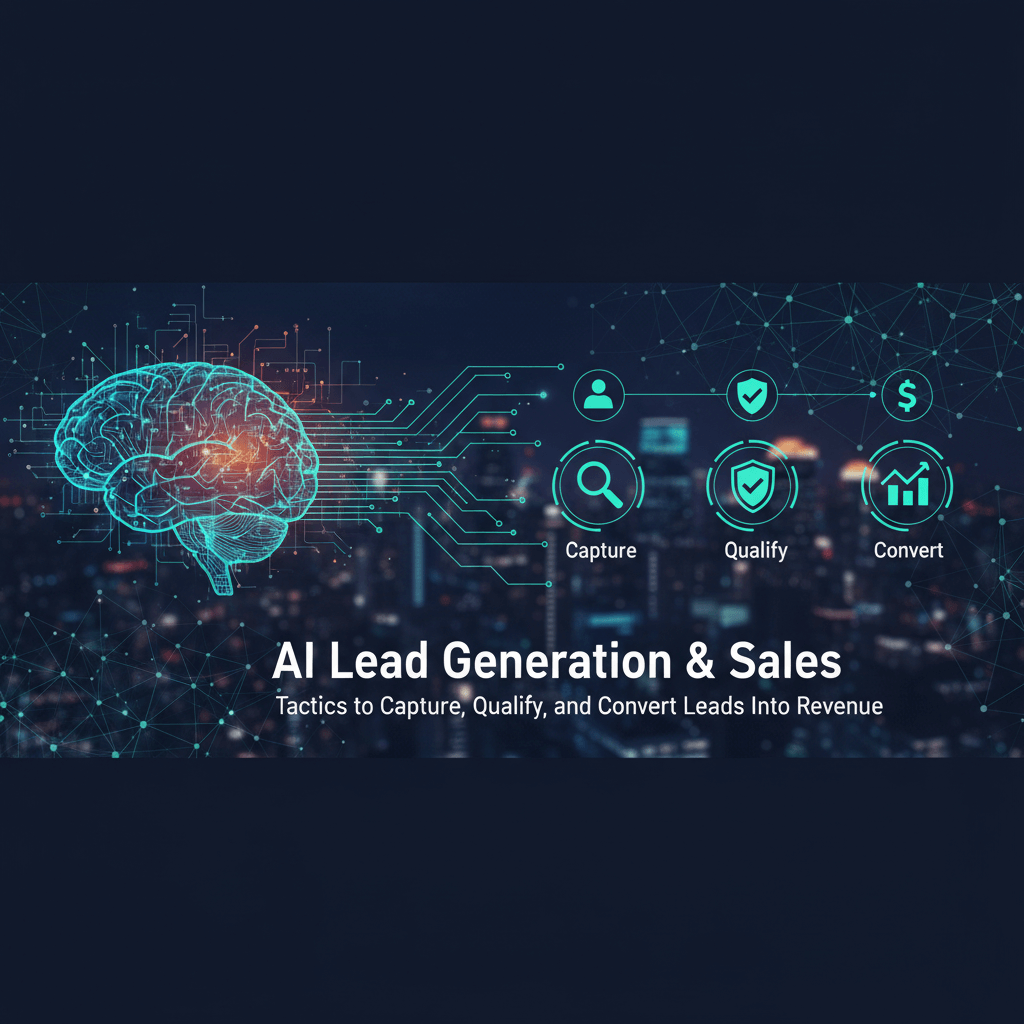

Lead generation is no longer about collecting contacts, it is about starting the right conversations at the right time. In this guide, you will learn practical tactics to capture, qualify, and convert leads using AI automation across messaging channels, without sacrificing personalization.
Lead generation and sales have changed dramatically in the last few years. Buyers expect instant answers, prefer messaging over calls, and research options long before they speak with a human salesperson. That shift creates a challenge for growing businesses: the faster you respond and the more relevant your follow-up, the more revenue you capture. But doing this manually across WhatsApp, Instagram, Telegram, Facebook Messenger, and website chat is difficult, especially outside business hours.
This is where AI-powered automation becomes a competitive advantage. Platforms like Staffono.ai provide 24/7 AI employees that can handle customer communication, bookings, and sales across multiple channels. Instead of letting leads go cold, you can engage, qualify, and route them to the right next step in minutes, not days.
Many companies treat lead generation as a series of isolated campaigns: run ads, collect form fills, then have someone call back later. The problem is that lead intent is time-sensitive. The more friction you add, the lower your conversion rate. A modern lead generation engine continuously attracts, captures, and nurtures leads with consistent messaging and clear qualification rules.
A strong engine includes three layers:
Forms still work, but messaging often converts better because it feels conversational and immediate. Click-to-WhatsApp or click-to-Instagram DM ads reduce friction: the lead taps once and is already in a conversation. The key is having a fast responder that can guide the next step. If a lead messages you at 11:30 PM and waits until morning, you often lose them to a competitor.
With Staffono.ai, an AI employee can respond instantly, ask a few smart questions, and either book a meeting or provide the right information. This helps you treat messaging as a primary conversion channel, not just a support inbox.
Many websites ask for too much too soon: “Request a quote” with 10 fields. A micro-commitment is a smaller next step that still signals intent, for example:
These offers work best when the interaction feels tailored. AI chat and messaging can ask only what is necessary, then adapt the next question based on the answer.
Modern buyers do not care which inbox you prefer. They will message wherever is most convenient. If your team can only respond on one channel, you are effectively turning away leads. A practical goal is omnichannel capture: web chat plus the messaging apps your audience uses most.
Staffono.ai is designed for multi-channel customer communication, including WhatsApp, Instagram, Telegram, Facebook Messenger, and web chat, so you can unify lead capture without forcing customers into a single path.
Qualification is where lead generation turns into sales efficiency. The goal is not to disqualify people aggressively. The goal is to quickly understand fit, urgency, and next steps, then route the lead appropriately.
Start with a simple framework you can apply consistently. Common criteria include:
You do not need to ask all of these at once. In messaging, fewer questions can outperform longer scripts. The trick is progressive profiling: collect the minimum to route correctly, then gather more details later.
Instead of “What is your budget?” as the first question, try a softer sequence:
For example, a B2B service provider can ask: “Are you looking for lead generation support, sales automation, or customer support automation?” Based on the answer, the system can propose a package range and then confirm timeline and team size.
AI employees in Staffono.ai can run these conversations 24/7 and keep them consistent across channels, which reduces the common problem of different reps qualifying leads in different ways.
Not every lead should go directly to a sales call. A simple routing model can look like this:
Routing also depends on operational constraints. If your calendar is full, you may prioritize high-intent leads and provide self-serve information to others. AI automation makes it easier to apply these rules consistently without delaying responses.
Most revenue is lost in follow-up. Leads forget, get busy, or compare alternatives. The businesses that win are the ones that follow up quickly, clearly, and persistently, without being annoying.
Speed-to-lead is one of the strongest predictors of conversion. If your team cannot respond instantly, automation should. Even a simple first response that confirms the request, asks one qualifying question, and offers a next step can protect the opportunity.
Staffono.ai helps by providing AI employees that can handle first response and ongoing messaging, so your human team can focus on high-value conversations and closing.
Common objections show up in almost every industry:
Prepare short, clear responses and keep them consistent. When objections are handled well, leads move forward faster. When they are ignored, leads disappear. AI-assisted messaging is effective here because it can instantly share relevant information, link to a case study, or propose an available time slot.
Every extra step between interest and appointment reduces conversion. Instead of “Our team will call you,” offer instant scheduling: “Here are three times available today or tomorrow, which works for you?” If your business is appointment-based (clinics, salons, consultants, real estate), booking is often the moment revenue becomes predictable.
Staffono.ai supports bookings and can guide prospects from inquiry to scheduled appointment in the same conversation, across the channels they already use.
Not everyone buys on the first touch. A simple nurture strategy can include:
The best nurture feels like helpful customer communication, not spam. AI automation can schedule and personalize follow-ups based on what the lead asked about, so the messages stay relevant.
A home repair company runs click-to-WhatsApp ads. The AI employee asks for the issue type, location, and preferred time, then shares an estimated range and books an appointment. High-intent leads get scheduled immediately. Low-intent leads receive a helpful checklist and a follow-up message the next day. Result: fewer missed leads after hours and higher booking rates.
A SaaS company uses web chat to capture demo requests. The AI employee asks company size and use case, then routes enterprise leads to an account executive and smaller leads to a self-serve demo plus a follow-up sequence. Result: sales reps spend more time on qualified conversations and less time on basic Q and A.
A brand receives daily questions about sizing, shipping, and returns. The AI employee answers instantly, recommends products based on preferences, and shares a personalized link. If the customer hesitates, it offers a small incentive or alerts a human agent for high-value carts. Result: improved conversion from social traffic and reduced support load.
Track a few core metrics to improve continuously:
When these metrics improve, revenue becomes more predictable. Automation plays a big role because it makes performance less dependent on who is online at any moment.
Capturing, qualifying, and converting leads is fundamentally a communication problem. The businesses that win are the ones that show up instantly, ask the right questions, and guide prospects to the next step with minimal friction. AI and automation make that possible at scale, especially in messaging-first markets where customers expect fast, conversational service.
If you want to turn every inbound message into a structured sales process, Staffono.ai can help by providing 24/7 AI employees that engage leads across WhatsApp, Instagram, Telegram, Facebook Messenger, and web chat, qualify them consistently, and automate bookings and follow-up. When your pipeline is always active, even while your team sleeps, lead generation stops being a daily scramble and becomes a reliable growth system.