
Most teams already have the raw material for powerful automation: yesterday’s conversations, missed follow-ups, and repeated questions. This guide shows real scenarios and step-by-step workflows you can implement quickly, with clear inputs, decisions, and outcomes across messaging channels.
“Use cases” sound abstract until you look at what your team actually does all day: answering the same questions, chasing missing details, switching between inboxes, and trying to remember who needed a follow-up. The fastest way to build automation that matters is not to start from a feature list. Start from the moments where conversations stall, handoffs break, or money leaks.
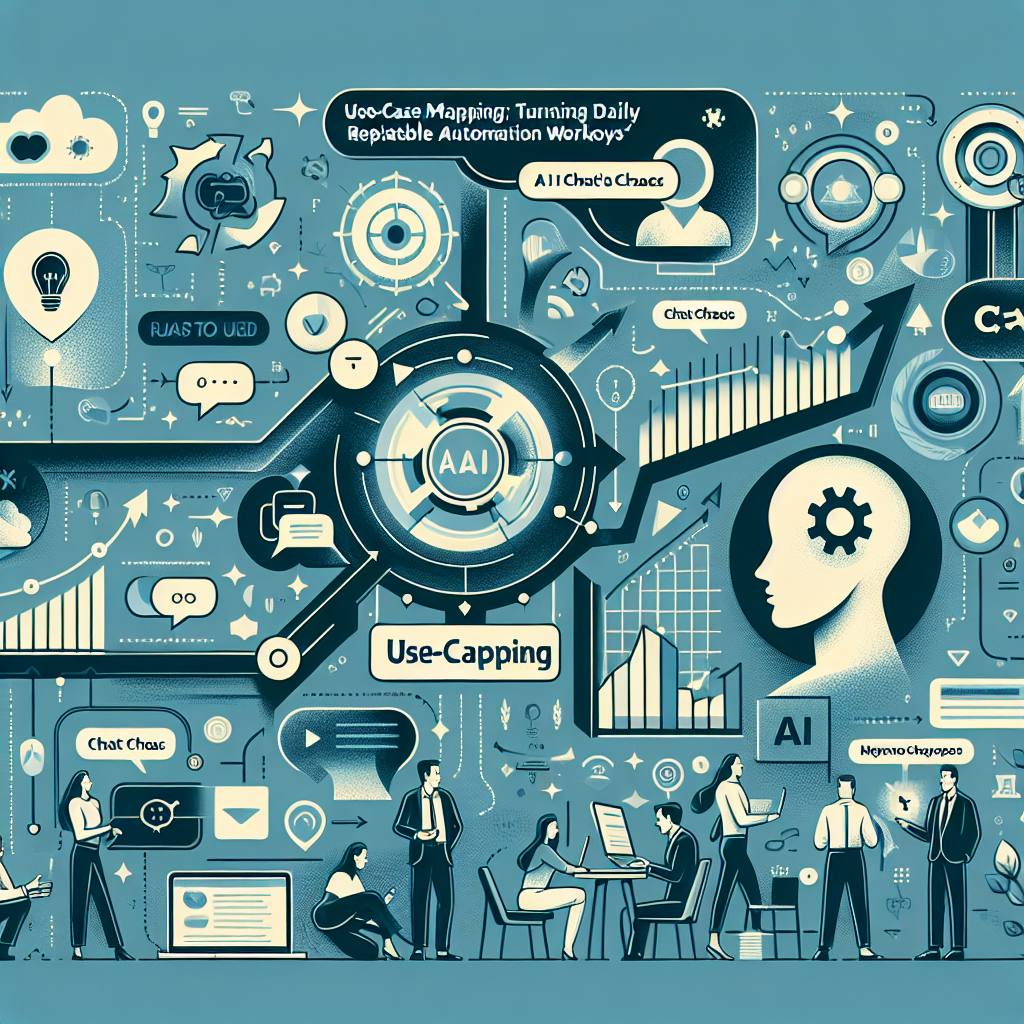
This article introduces a practical method for building use cases: use-case mapping. You will capture real scenarios from your messaging channels, translate them into repeatable workflows, then implement them step by step so they run reliably at scale. Along the way, you will see where an AI employee can take over routine parts of the conversation, and where humans should stay in control.
A use-case map is a simple blueprint that turns a messy real-world scenario into an operational workflow. Each map includes:
Platforms like Staffono.ai (https://staffono.ai) are designed for this exact reality: multi-channel messaging, real-time automation, and AI employees that can run these workflows 24/7 while keeping the conversation coherent and on-brand.
Pick one week of conversations across channels. Export or review a sample of 50 to 200 threads. You are looking for repetition: identical questions, identical delays, identical outcomes.
As you read, label each thread with a friction reason:
For each friction reason, define one measurable outcome you want to protect: faster qualification, higher booking rate, fewer back-and-forth messages, fewer refunds, higher show-up rates.
Decide what the AI can do end-to-end, and where it must escalate. A healthy boundary looks like this: AI collects details, confirms constraints, and proposes next steps. Humans approve exceptions, discounts, sensitive complaints, and edge cases.
Problem: Prospects message at night, get a reply in the morning, and disappear.
Workflow goal: capture intent, qualify, and schedule the next step without waiting for staff.
Step-by-step workflow:
With Staffono.ai, this becomes a consistent, always-on front desk. The key is not just replying quickly, but guiding the prospect to a concrete next step that reduces drop-off.
Problem: “How much does it cost?” turns into 12 messages, and the team still cannot quote accurately.
Workflow goal: turn price curiosity into a structured quote request in under 3 minutes.
Step-by-step workflow:
In Staffono.ai, you can standardize what “quote-ready” means, so the AI collects the exact fields your sales team needs, and your responses stay consistent across every channel.
Problem: appointment changes create a ripple effect of missed messages, double bookings, and no-shows.
Workflow goal: reduce scheduling workload while improving show-up rates.
Step-by-step workflow:
AI employees in Staffono.ai can manage these conversations across WhatsApp, Instagram, Telegram, Facebook Messenger, and web chat while keeping the same booking logic, which is especially valuable when customers choose different channels depending on the moment.
Problem: support teams drown in repetitive order questions that should be self-serve, but customers still want a human tone.
Workflow goal: resolve status inquiries quickly and escalate exceptions.
Step-by-step workflow:
The win is not only speed. It is consistency and reduced emotional friction, because customers get clear next steps instead of vague apologies.
If every agent answers differently, the AI will mirror that inconsistency. Standardize your required fields, routing rules, and tone first.
Customers abandon long interrogations. Ask one question at a time, prioritize the minimum needed to move forward, then gather optional details later.
Every workflow needs an exit: booked, paid, escalated, or closed. Otherwise you will create infinite loops of reminders and confusion.
Once your map is clear, execution becomes the hard part: keeping logic consistent across channels, responding instantly, capturing structured data, and handing off to humans without losing context. Staffono.ai (https://staffono.ai) is built to run these operational conversations as AI employees that work 24/7, handle bookings and sales flows, and support multi-channel messaging from one automation layer.
If you want to move from “we should automate” to “this workflow runs every day,” choose one scenario from this article, map it in one page, then implement it with Staffono.ai so your team spends time on exceptions and relationships, not repetitive chat admin.