
Most “use cases” fail because they start too big. This guide shows how to build a use-case ladder, starting from a single real conversation and turning it into a step-by-step workflow your team can run (and improve) every day.
When people say they want “AI use cases,” they often mean something broad like “automate support” or “improve lead gen.” The problem is that broad goals rarely translate into a workflow your team can implement this week. A more reliable approach is to start small: one real conversation, one repeated pain point, one measurable outcome. Then you climb upward, adding steps only when the foundation is stable.
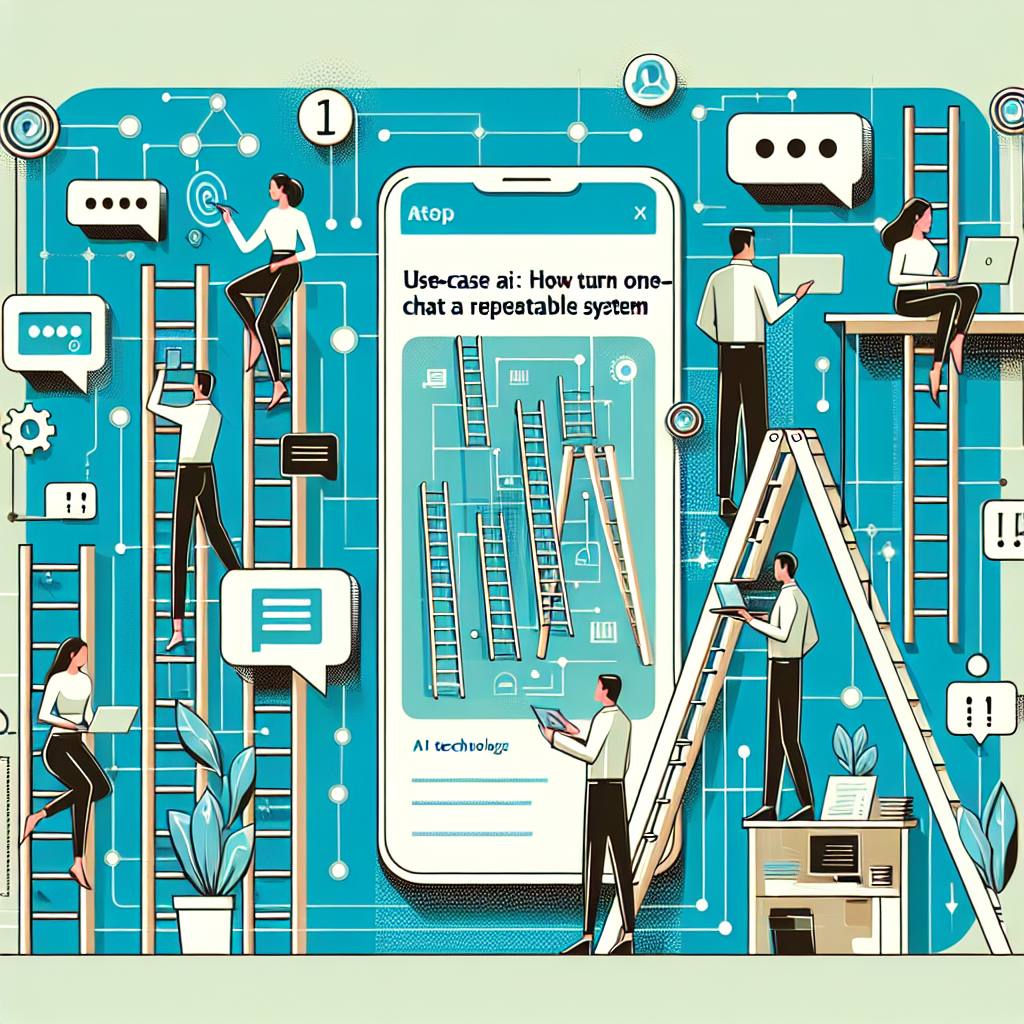
This is the idea behind a use-case ladder. Instead of designing a giant automation plan, you build an implementable chain of actions that begins with a message and ends with a business result, like a booked appointment, a qualified lead, a saved support hour, or a paid invoice. Platforms like Staffono.ai make this practical because you can deploy AI employees across WhatsApp, Instagram, Telegram, Facebook Messenger, and web chat, and then refine the same workflow based on real message patterns.
A use-case ladder is a step-by-step workflow built from the smallest reliable unit: a repeated message scenario. You do not start with “automation.” You start with “What message do we get every day that creates delay, confusion, or lost revenue?”
Each rung on the ladder adds one layer of reliability:
This approach works because it reduces risk. You can implement Rungs 1-3 in a day, prove value, then expand. If you use a messaging-first automation platform like Staffono.ai, you can apply the ladder across channels without rewriting the entire process for each inbox.
Pick one conversation from the last 7 days that meets these criteria:
Then rewrite it as a workflow using this simple format:
Below are five real-world ladders you can implement step by step. Each begins with one common message and ends with an operational result. They are designed to be channel-agnostic so they can run in WhatsApp, Instagram, web chat, and more.
Common message: “Hi, how much is it?”
Practical example: A cleaning company can ask: “Is this for a home or office, how many rooms, and what date?” If it matches a standard package, the AI employee can quote instantly and offer available times. If it is a complex post-renovation job, it can collect photos and escalate with a clean summary.
With Staffono.ai, you can implement this as a consistent chat flow across WhatsApp and Instagram so the same pricing logic is applied even when your team is offline. The result is fewer lost leads and fewer manual clarification messages.
Common situation: A lead calls, nobody answers, then they disappear.
Practical example: A dental clinic can automatically respond: “Sorry we missed you. Are you looking for a checkup, pain relief, or cleaning?” Then it offers the next available times and books once the patient confirms.
Staffono.ai is especially useful here because your AI employee can respond 24/7, which is exactly when missed calls happen. You recover leads that would otherwise require staff to chase later with low success.
Common message: “Can you tell me more?” or “We are interested.”
Practical example: A B2B agency can ask: “What are you selling, what is your monthly ad budget, and when do you want to launch?” High-fit leads get a calendar link. Low-fit leads get a helpful checklist and an option to re-engage later.
If you run this through Staffono.ai across web chat and Messenger, your qualification stays consistent and your reps receive cleaner handoffs. This reduces “discovery calls” that were never going to close.
Common message: “My order is late” or “It does not work.”
Practical example: An ecommerce brand can instantly answer shipping questions by asking for the order number and providing status. For product defects, it can request photos and route the case to returns with all details attached.
This is where an AI employee from Staffono.ai adds operational value: it does not just “reply,” it standardizes intake so your team stops spending time on repetitive questions and missing critical details.
Common situation: Customers buy, then go quiet until there is a problem.
Practical example: A fitness studio can check in the day after the first class, then recommend a membership plan if the customer responds positively. A software company can send a “setup completed?” message and route any friction to onboarding.
Because Staffono.ai supports multiple messaging channels, you can follow up where customers actually respond, rather than relying only on email. That increases feedback, reviews, and repeat purchases.
Use this checklist to move from idea to a working ladder quickly:
A common mistake is trying to automate exceptions before you automate the main path. Your first ladder should handle the 60-80% most common patterns, then you expand.
You do not need complex analytics to validate impact. Track a few before-and-after indicators:
Once you see stable improvement in one scenario, you have a template for the next ladder. That is how automation scales: repeatable rungs, not huge leaps.
Use-case ladders require consistent execution across channels and time zones. That is exactly what Staffono.ai is built for: AI employees that handle customer communication, bookings, and sales around the clock across WhatsApp, Instagram, Telegram, Facebook Messenger, and web chat.
If you want to start small, pick one ladder, implement the capture, clarify, and decide steps first, then add actions like booking and ticket creation. When you are ready to make your messaging operation predictable, Staffono.ai helps you turn your best conversations into repeatable systems that keep working even when your team is busy or offline.