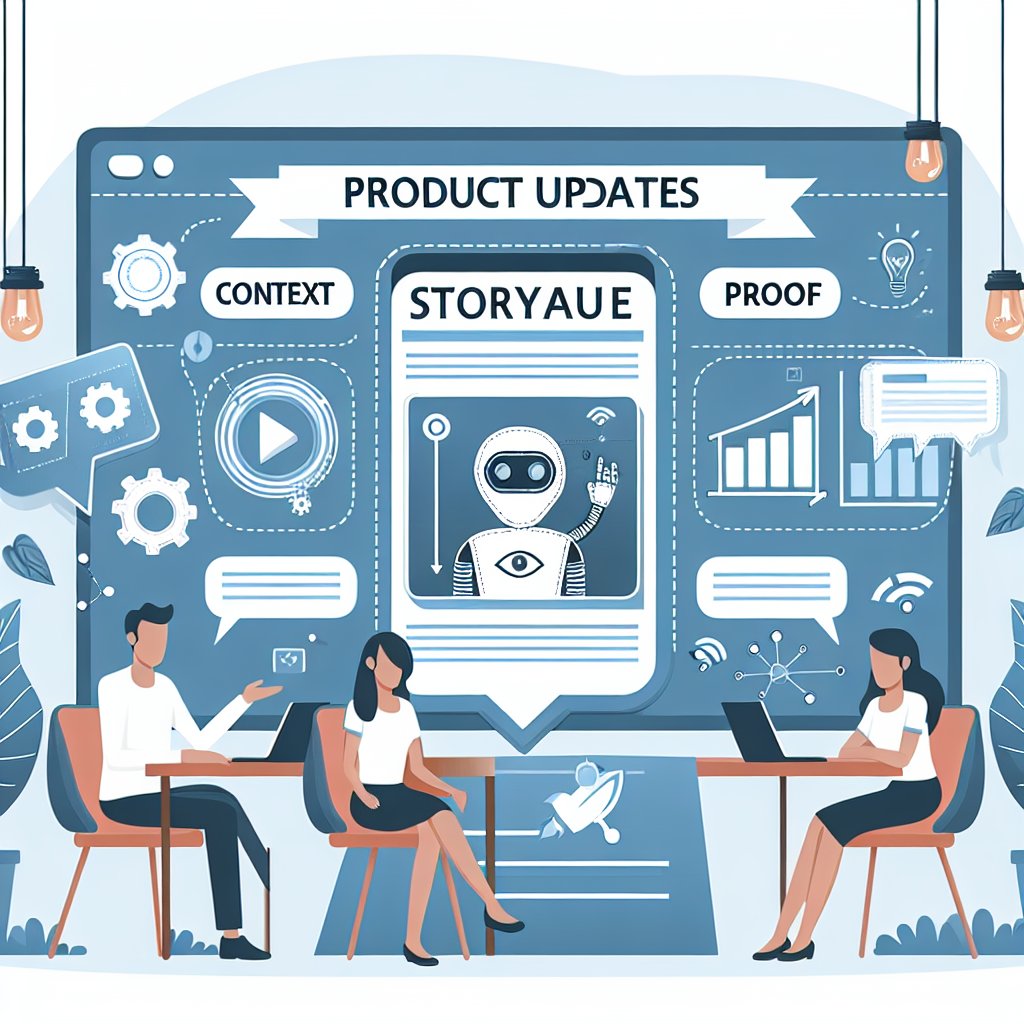

Product updates are not just announcements, they are moments of re-onboarding. When you explain what changed and why with the right context, you reduce confusion, speed up adoption, and build trust in your roadmap.
Most teams treat product updates like a broadcast: ship it, write a short note, post it, move on. But customers experience updates differently. An improvement that seems “obvious” to a product team can feel like a broken habit to a user who relies on the old workflow every day. That gap is where churn, support tickets, and slow adoption happen.
A better model is to think of every update as onboarding. Not the first-day onboarding, but the ongoing kind that keeps users confident as your product evolves. Great update communication answers three questions quickly: what changed, why it changed, and what I should do next. When you get that right, you can turn announcements into steady product momentum.
Internally, you ship a feature. Externally, users lose and gain behaviors. The most useful update messages describe a before-and-after state in plain language.
For example, instead of: “Improved lead routing algorithm,” say: “New leads now go to the right teammate faster, based on intent and availability, so fewer inquiries wait in a queue.” The second version gives the user a mental picture of what changes in their day.
This is especially important for messaging-heavy businesses where changes affect live conversations. If your customers run sales or support in WhatsApp, Instagram, Telegram, Facebook Messenger, or web chat, the cost of confusion is immediate: slower replies and missed revenue.
This format reads like onboarding because it is onboarding. It teaches the new behavior without requiring a support ticket.
“Why” is not a technical justification. It is a promise about outcomes. Users want to know that you made the change for them, not for your architecture or internal convenience.
Try framing “why” in one of these outcome categories:
When you can, include a simple metric from real usage. Even a directional statement helps: “Early customers are resolving chats faster because the reply suggestions now consider the last three messages, not just the last one.”
If you use Staffono.ai (https://staffono.ai) to automate conversations and bookings across messaging channels, you can also use conversation logs and handoff outcomes to justify “why” with evidence. For example: “We changed the booking flow because many users asked the same two questions before confirming a time. Now the AI employee answers those automatically and confirms the slot in fewer steps.” That is a customer-centered reason, backed by data.
One update can mean different things to different roles. A sales manager cares about conversion and routing. A support lead cares about resolution time and handoffs. An admin cares about permissions and compliance. If you announce the same paragraph to everyone, it becomes noise.
You do not need three separate blog posts. You need one update page with role-based callouts and a clear “If you are X, read this” structure. That alone can cut support tickets after a release.
Teams using Staffono.ai often have mixed stakeholders: business owners, sales reps, and support agents all touching the same messaging inbox. Role-based update notes help each group understand exactly how the AI employee’s behavior or configuration changed, without forcing everyone to read everything.
Adoption does not happen because users are informed. It happens because users take the first step. Your update should include an easy action that fits inside five minutes.
Make the action specific and scoped. “Explore the new dashboard” is not a first step. “Filter by channel and save a view called ‘High intent WhatsApp’” is.
If your product includes automation, the first step can be a mini recipe. For example, with Staffono.ai you can suggest: “Enable the AI employee to qualify inbound leads after hours, then route qualified leads to your sales rep at 9am.” That turns a feature into a measurable workflow change.
The hidden job of product updates is risk reduction. Users worry about breaking existing processes. Address that fear directly with clarity.
This is not legal language. It is reassurance. It tells users you thought through consequences.
In messaging automation, safety lines matter even more because customer conversations are live. If an update changes how messages are routed or how the AI replies, say what guardrails exist, how humans can take over, and where to review conversation history. Staffono.ai, for instance, is built around practical control: businesses can monitor conversations, configure flows, and ensure handoffs happen when a human is needed. When you communicate updates with those controls in mind, users feel safer adopting new automation.
Feature lists are easy to write and easy to ignore. Scenarios teach users how to succeed.
Instead of: “Added booking confirmation improvements.”
Try: “If a customer asks ‘Do you have openings this week?’ the AI employee now proposes three time options, collects the name and service type, then confirms the booking and sends a reminder message. This reduces back-and-forth and helps you capture bookings even when your team is offline.”
That scenario makes the value obvious and invites the user to try it.
“When a lead comes in from Instagram, the system now asks two short questions: budget range and timeline. If the answers match your criteria, the lead is tagged ‘Qualified’ and routed to your sales team. If not, the lead is nurtured with a helpful resource and a follow-up message.”
This kind of narrative is also SEO-friendly because it matches how people search: “how to qualify Instagram leads,” “automate WhatsApp follow-ups,” “reduce response time in Messenger,” and similar queries.
Where you publish matters as much as what you write. Use multiple channels, but let each do one job well.
If your customers live in messaging channels, consider delivering a brief update summary in the same place. For example, a short WhatsApp message to admins that links to the full notes can increase reach dramatically.
Staffono.ai is particularly useful here because it can automate parts of update distribution and follow-through. Your AI employee can answer “What changed?” questions, link users to the right instructions, and even guide them through setup steps inside chat, which reduces the load on your human team after releases.
When you treat product updates as ongoing onboarding, you stop “announcing” and start enabling. Users feel oriented, teams see faster adoption, and your roadmap becomes easier to trust.
If you want to make this process even smoother, especially for messaging-first businesses, Staffono.ai (https://staffono.ai) can help you operationalize updates through automation: route update-related questions to the right place, let an AI employee explain new workflows in chat, and ensure leads and customers still get fast responses while your team adjusts. When your product changes, your communication system should scale with it, and Staffono makes that practical.