

Product updates are not just a list of changes, they are a reliability signal to customers. This guide shows how to announce improvements and new features with clear intent, predictable timing, and messaging that reduces confusion while driving adoption.
Most teams treat product updates like housekeeping: ship, write a few bullets, post a changelog, move on. Customers experience them differently. An update changes expectations, workflows, and sometimes revenue. That means every announcement is also a trust event. If users feel surprised, they hesitate. If they feel guided, they lean in.
This post reframes product updates as trust infrastructure. You will learn what to communicate (and what to avoid), how to explain why a change happened, and how to roll out improvements and new features so customers can adopt them without friction. Along the way, we will use practical examples you can adapt to your own product and show how Staffono.ai (https://staffono.ai) can automate the communication, education, and follow-up that product updates require.
Customers rarely get upset because you changed something. They get upset because you changed something in a way that made them feel uninformed or powerless. Trust breaks when users cannot answer three simple questions:
When those answers are missing, customers fill the gaps with fear: “Will this break my process?”, “Will it cost more?”, “Will I lose access?”, “Did my team miss something?” Even a minor UI tweak can trigger those reactions if the announcement is unclear.
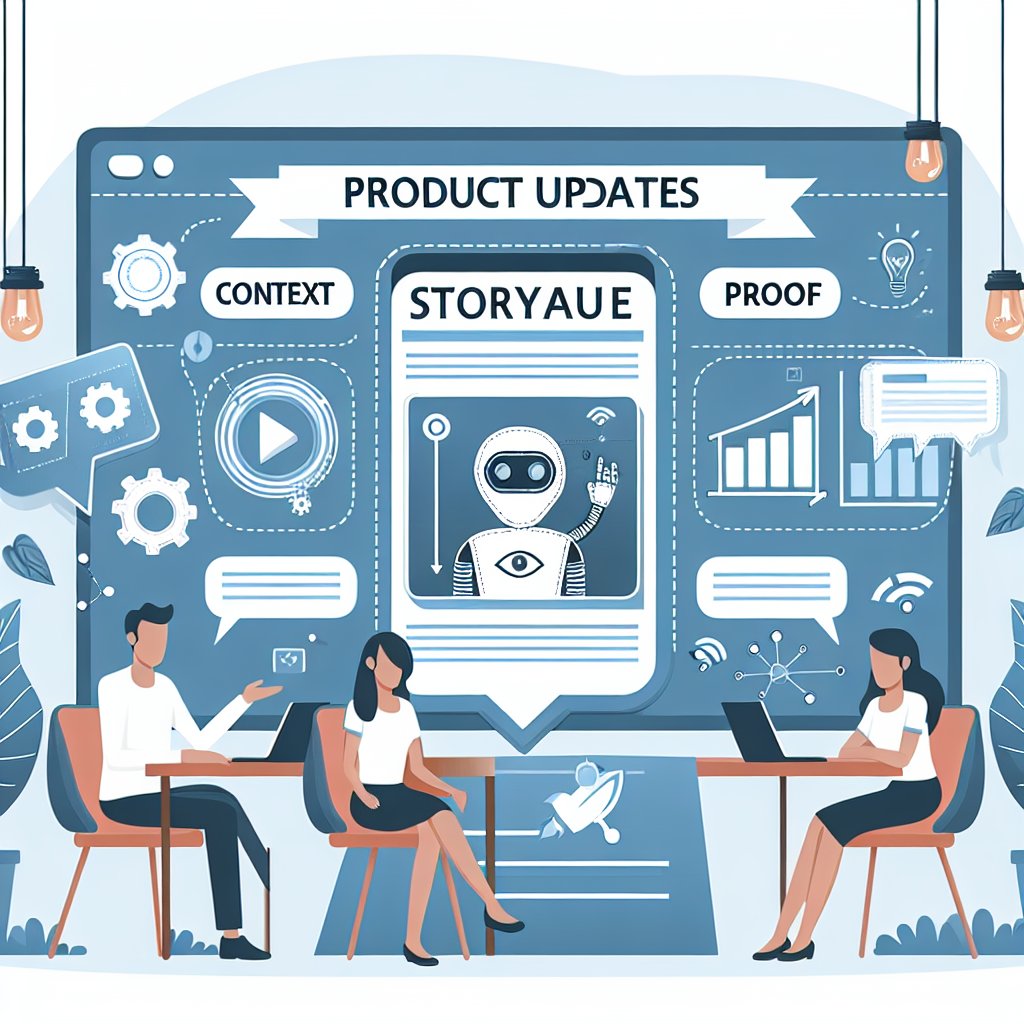
People use software inside routines: morning pipeline checks, daily bookings, end-of-day reporting. Updates work best when you respect those routines. Use this sequence to frame announcements:
This model works for new features, improvements, and deprecations. It also scales across channels like email, in-app, and messaging.
A strong “what changed” section is specific, testable, and anchored in user-visible behavior. Avoid internal language like “refactored”, “enhanced”, or “optimized” unless you immediately translate it into customer outcomes.
Testability matters. If users can verify a change, they trust it more. If they cannot, they assume marketing spin.
Customers do not need your entire roadmap debate, but they do need the reasoning. The simplest formula is:
Example: imagine you changed how notifications work in a sales automation product.
Problem: teams missed replies because notifications were scattered across channels. Decision: unify notifications into one inbox view. Trade-off: the old per-channel notification toggle moves to a new settings page. Outcome: faster response times and fewer missed leads.
This level of honesty builds credibility. It also reduces support tickets because users understand the intent and can adapt quickly.
One update often impacts multiple personas differently: admins, operators, managers, and external clients. If you publish one generic announcement, it will be irrelevant to most readers and confusing to the rest.
Segment by impact and by capability:
Staffono.ai can help here because many customers prefer messaging over email. With Staffono, you can deliver segmented update messages via WhatsApp, Instagram, Telegram, Facebook Messenger, and web chat, and tailor the content based on user role, language, and behavior. Instead of sending one announcement to everyone, you can automatically route the right version to the right people.
Most teams only do the announce step. Adoption happens when you also teach and confirm. Think in three layers:
Short, clear, and oriented around impact. This is a “heads up” and a promise of value.
Lightweight guidance: a 60-second walkthrough, a checklist, or “if you do X, click Y.” Include one or two common scenarios.
A follow-up that checks whether the user succeeded. This is where you catch confusion early.
Example: after releasing a new booking confirmation flow, you can send an automated message two days later: “Have you enabled the new confirmation template? Reply 1 for help, 2 if done.” With Staffono.ai, that confirmation layer can be automated as a conversational flow that resolves questions instantly and escalates edge cases to a human.
Even great changes create stress if they appear overnight. Reduce surprise by using predictable rollouts:
If you run a messaging-first business, phased rollouts are especially important because changes can affect customer conversations in real time. Staffono.ai users often run multi-channel automations, so communicating timing clearly helps teams avoid disruption across WhatsApp, Instagram DMs, and web chat simultaneously.
Use this copy skeleton to produce a clear update in minutes:
When you publish, reuse the same structure across channels. Consistency reduces cognitive load and helps users scan.
Shipping is an internal milestone. Adoption is the external one. Track metrics that prove customers understood and used the change:
Messaging-based confirmation surveys can improve measurement. For example, Staffono.ai can automatically ask a small sample of users in WhatsApp or web chat whether the update helped, collect structured replies, and tag feedback by persona. That turns “we think it is fine” into evidence.
If your customers live in messaging apps, your product updates should too. Staffono.ai (https://staffono.ai) helps teams operationalize product updates as ongoing communication, not a one-time post. You can automate segmented announcements, send guided “how to” flows, and run confirmation check-ins across WhatsApp, Instagram, Telegram, Facebook Messenger, and web chat. Because Staffono’s AI employees work 24/7, users get immediate answers when a change triggers questions, which protects trust at the exact moment it is most fragile.
If you want your next release to feel calm, clear, and confidence-building, consider using Staffono.ai to turn updates into conversational support and adoption campaigns that run automatically while your team keeps building.