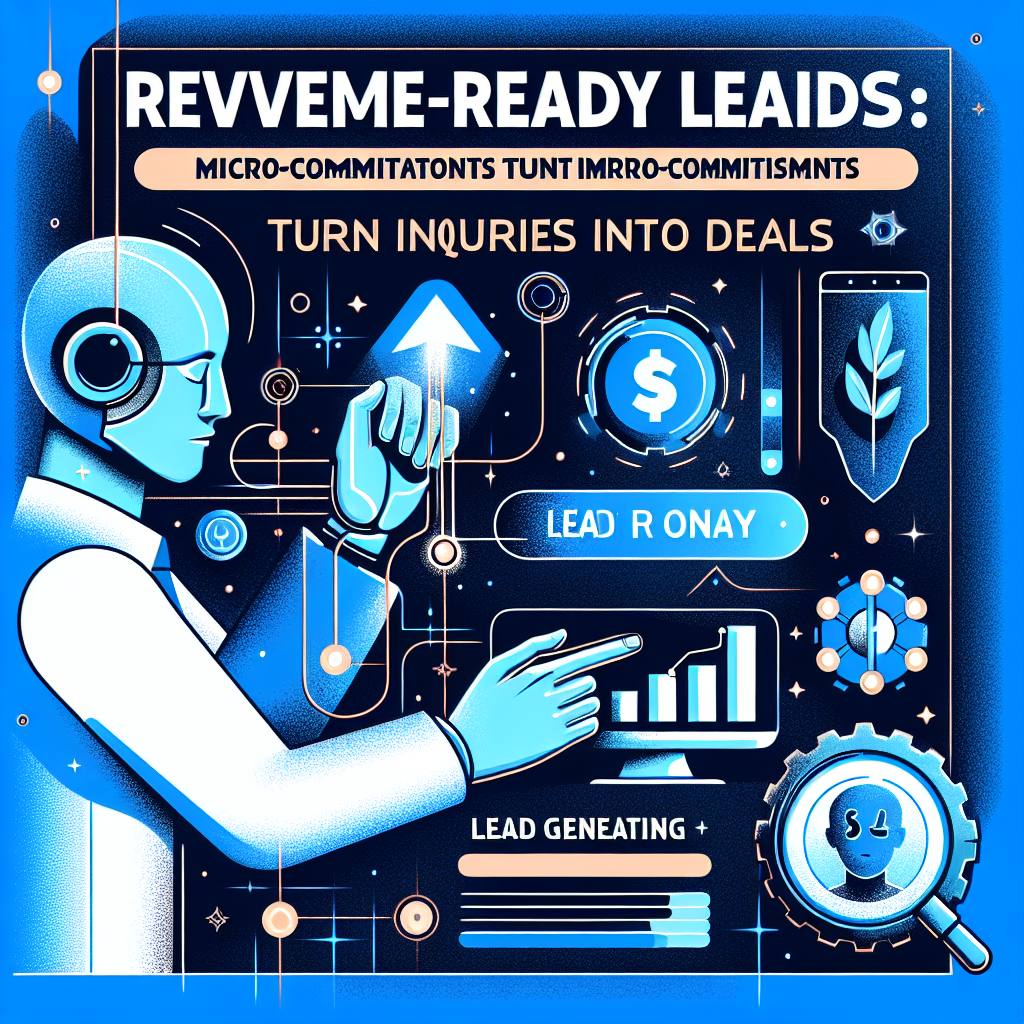


Most lead generation problems are not traffic problems, they are prioritization problems. This guide shows how to capture leads across message channels, qualify them with practical scoring, and convert them with fast, relevant follow-up that feels personal at scale.
Leads rarely arrive in neat boxes. They show up as half-questions in Instagram DMs, late-night WhatsApp messages, “how much?” comments, web chat inquiries, missed calls, and referral screenshots. The teams that grow revenue consistently are not the ones that generate the most leads. They are the ones that classify intent quickly, route the right conversations to the right people, and follow up with discipline.
This article breaks lead generation and sales into a simple system: capture, qualify, and convert. You will get actionable tactics, example scripts, and a practical scoring blueprint you can implement in a spreadsheet, CRM, or an automation layer like Staffono.ai (https://staffono.ai) that keeps conversations moving 24/7 across WhatsApp, Instagram, Telegram, Facebook Messenger, and web chat.
Modern lead capture is less about forms and more about frictionless messaging. People want to ask one question and get an immediate, relevant answer. Your job is to reduce the steps between curiosity and contact, then store the context so the conversation can continue without repeating basics.
High-intent leads often start in messaging, not on a landing page. The capture goal is to convert attention into a two-way conversation you can continue later.
Staffono.ai helps unify these channels so a lead can start on Instagram and continue on WhatsApp without your team losing the thread. That continuity alone improves conversion because buyers do not want to re-explain themselves.
Most forms fail because they ask for commitment before value. Instead, offer a tiny next step that feels helpful, not salesy.
In messaging, the micro-offer becomes your first question. The goal is not to sell. The goal is to earn permission to ask the next question.
Qualification is where revenue is won or lost. Without a consistent method, sales teams spend time on low-fit leads while high-intent buyers wait. The fix is a scoring model that is easy enough to use daily, and strict enough to protect focus.
You do not need a complex algorithm. Start with three dimensions and a 0-3 score for each. Total score ranges from 0 to 9.
Now you have a language for prioritization. A 8-9 lead gets immediate human follow-up. A 5-7 lead gets a structured nurture sequence and an appointment attempt. A 0-4 lead gets resources, light check-ins, and retargeting.
Good qualification feels like helpful customer service. Use short, choice-based questions.
Staffono.ai can ask these questions automatically, tag the lead based on answers, and route high scores to your sales team. This prevents the common failure mode where your best prospects arrive after hours and go cold by morning.
Disqualification is not rejection. It is protecting your pipeline. Offer a helpful alternative resource or a lower-tier option when available.
Conversion is mostly execution. The best offer loses if the next steps are unclear or follow-up is inconsistent. The key is to make the path to “yes” easy, and the path to “no” fast, so you can recycle attention efficiently.
Generic replies kill momentum. Use the details they gave you to respond in a way that proves you listened.
Automation helps here, but it must stay contextual. Staffono.ai can pull from your service catalog, pricing rules, and availability to provide accurate answers instantly, then hand over to a human when negotiation or custom scoping is required.
Every lead should be guided to one of two outcomes.
Do not mix the two. If you push “book a call” for a simple purchase, you add friction. If you push “pay now” for a complex purchase, you create anxiety.
Most deals are lost to silence. A simple cadence keeps you present without spamming.
Staffono.ai can automate this cadence across messaging channels while keeping a human tone, and it can stop automatically when the lead replies or converts.
Objections are predictable. Write responses before you need them, and make them easy to reuse. Common categories:
Example response to price: “If staying under $X is the priority, the best fit is our Starter option. If the priority is faster results, the Pro option includes setup and ongoing support. Which outcome matters more for you?”
Capture: “Check availability today” in web chat and WhatsApp. Qualify: service type, preferred time, urgency. Convert: book appointment with reminders and pre-visit instructions. Staffono.ai can handle the initial questions, confirm slots, and reduce no-shows by automating reminders and rescheduling flows.
Capture: “Get an estimate” and “Ask a question” in Linked ads to messaging. Qualify: company size, use case, decision timeline. Convert: schedule a call with a tailored agenda and send a short pre-call questionnaire. Staffono.ai can pre-qualify, score, and route high-intent leads to the right rep, while nurturing mid-intent leads with targeted answers and resources.
Capture: Instagram DMs and WhatsApp for product questions. Qualify: product type, size, delivery location. Convert: send checkout link, confirm shipping, and handle post-purchase questions. Staffono.ai can answer product questions instantly, recommend items based on needs, and recover abandoned carts through polite follow-ups.
Track these weekly. You will quickly see whether the bottleneck is capture (not enough conversations), qualification (too many low-fit leads), or conversion (slow follow-up, weak offers, unclear steps).
When lead generation and sales feel chaotic, it is usually because the system is missing one of three things: clear capture prompts, consistent qualification, or disciplined follow-up. Start small: implement the 0-9 lead score, write your top 10 objection replies, and standardize two conversion paths (appointment or checkout). Then automate the busywork.
If you want to scale without hiring an around-the-clock response team, Staffono.ai (https://staffono.ai) can act like a 24/7 AI employee that captures leads across messaging channels, qualifies them with structured questions, and keeps follow-ups moving until a human needs to step in. The result is simple: fewer missed opportunities, faster conversions, and a pipeline your team can actually manage.