

Not every product change deserves the same announcement, rollout plan, or level of explanation. This guide shows how to triage updates into clear categories so customers understand what changed, why it matters, and what to do next without noise or confusion.
Product updates are rarely the problem. The problem is how updates land: users feel surprised, support gets flooded, and adoption stalls because the message did not match the change. Teams ship a mix of fixes, improvements, and brand new features, then announce them as if they are equal. They are not.
A better approach is product update triage: sorting every change by urgency, risk, and value, then communicating and rolling it out accordingly. This makes announcements clearer, reduces friction, and helps customers take the next step faster. It also keeps your internal teams aligned, especially when customer conversations happen across multiple channels.
If your business relies on messaging to sell, book, or support customers, triage becomes even more important. When a change affects pricing, availability, onboarding, or booking flows, the “announcement” is not just a blog post, it is thousands of micro-conversations. Platforms like Staffono.ai help turn those conversations into consistent, accurate guidance 24/7 across WhatsApp, Instagram, Telegram, Facebook Messenger, and web chat.
Even strong products get pushback after a release because customers are evaluating change through their own context. Common failure patterns include:
Triage fixes these by giving each update the right packaging: the right story, the right channel, the right timing, and the right level of instruction.
Before you draft release notes, score each change in three dimensions. Keep it simple and repeatable.
How quickly does a user need to know about this?
What is the chance the change breaks something or creates confusion?
How much measurable benefit does the user get?
Once you score changes, you can decide how to communicate and roll out each group. The goal is not bureaucracy. The goal is matching the user’s attention to the real impact.
Most releases can be grouped into four practical categories. Each category has a different “what changed and why” format.
These include security patches, outages, and data issues. The announcement must be fast, direct, and operational.
Example copy angle: “We identified an issue affecting invoice PDFs for some accounts and deployed a fix. No payment data was exposed. If you downloaded invoices between 10:00 and 12:00 UTC, regenerate them from Billing.”
These changes alter how users complete a task. They can be valuable, but they must be taught.
Example: You changed how booking confirmations work. Users need to know the new confirmation rules, where to edit templates, and how to test.
These are new capabilities that do not disrupt existing flows. They are perfect for marketing and lifecycle messaging.
This is where you can turn product updates into growth. If your product touches messaging and sales, show how a feature changes conversion or response time, not just what button was added.
Performance and reliability updates build trust, but they need a different tone.
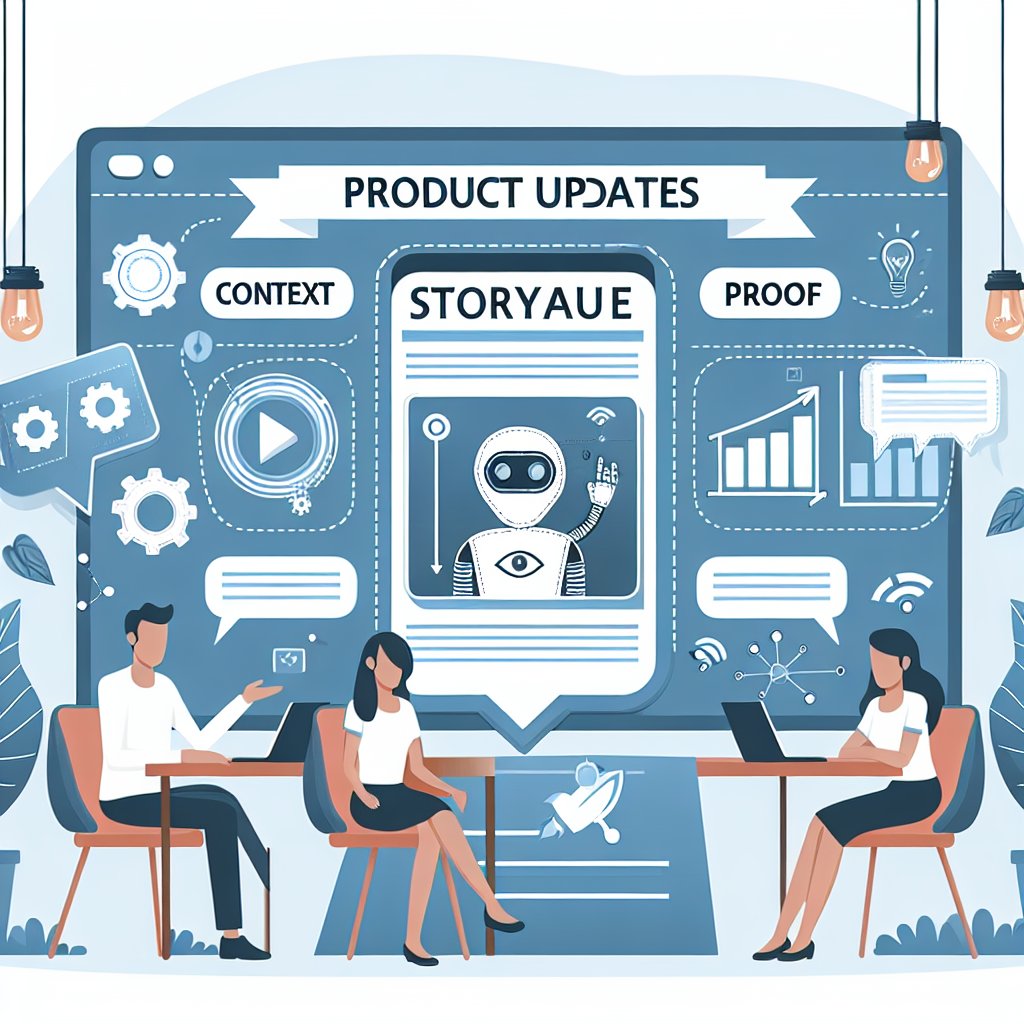
For most updates, a consistent structure reduces cognitive load. Use this pattern:
This format also helps your internal teams. Sales knows what to promise, support knows what to troubleshoot, and success knows what to coach.
Different changes require different rollout mechanics. Triage makes the decision straightforward.
When your product affects customer-facing conversations, monitoring should include message-level signals: spikes in “how do I,” “it stopped working,” “price changed,” or “can I still book.” This is where Staffono.ai can be especially useful because it can capture and categorize incoming questions across channels in real time, then route edge cases to humans with context.
Imagine you launched a new workflow that auto-qualifies leads based on answers in chat and pushes them to your CRM. The feature is high value and medium risk because it changes how leads are labeled.
A triaged announcement could look like:
If you use Staffono, you can implement this kind of workflow with AI employees that ask qualifying questions consistently, 24/7, while keeping the tone on-brand. Staffono.ai can also ensure a smooth handoff to a human rep when the lead becomes high intent, so the update actually changes outcomes, not just UI.
Teams often measure shipping, not impact. Tie your triage categories to clear metrics:
Also track conversation analytics. After releases, the fastest signal is what customers ask. With Staffono.ai, businesses can monitor question themes across WhatsApp, Instagram, Telegram, Messenger, and web chat, then update macros, knowledge, and routing rules quickly, which reduces confusion during the adoption window.
To make this sustainable, add a short triage step to your release process:
If your customers interact with you primarily through messaging, treat the release as a messaging event. Staffono.ai can act as your always-on frontline, handling repetitive questions, guiding users to the right steps, and escalating the minority of complex issues to your team with full context. When you are ready to make product updates feel calm, clear, and genuinely helpful, explore how Staffono.ai can automate the conversations around every release while keeping your customer experience consistent across channels.