
Most product updates fail not because the changes are bad, but because customers do not understand the impact, timing, or next step. This briefing-kit approach helps you announce improvements and new features with clarity, reduce support load, and turn releases into measurable adoption.
Product updates are rarely “just shipping.” They are change management for real people who already have routines, deadlines, and limited attention. When announcements are vague, overly technical, or scattered across channels, customers miss the point, teams repeat themselves, and adoption stalls. The result is familiar: new features go unused, support tickets spike, and the product feels unpredictable even when the engineering work is excellent.
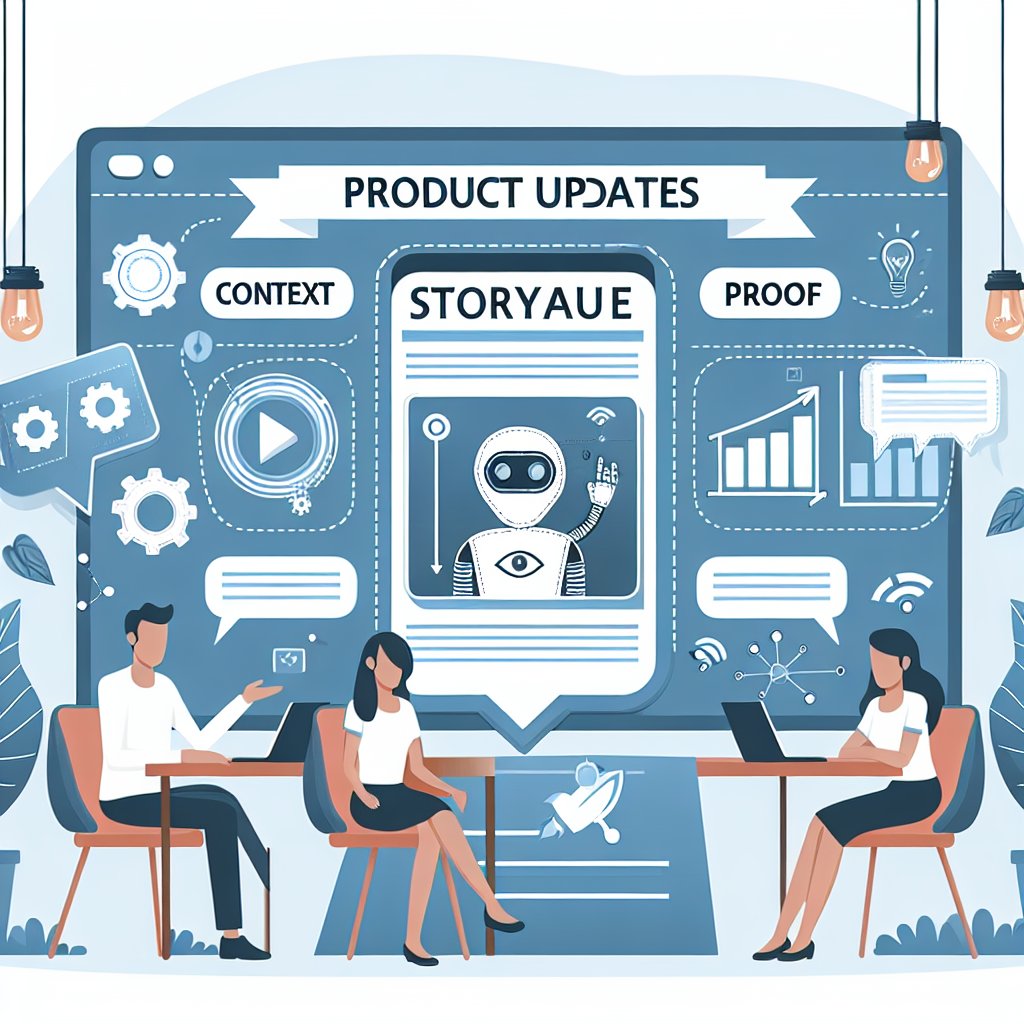
A better approach is to treat every release like a briefing. Not a press conference and not a changelog dump, but a structured kit that answers three questions for every audience: what changed, why it changed, and what to do next. This post breaks down a practical “Product Update Briefing Kit” you can reuse for announcements, improvements, and new features, plus examples and actions you can apply immediately.
Users do not wake up hoping to read release notes. They care about outcomes: fewer steps, fewer errors, faster results, lower risk, and less time spent asking for help. Updates are ignored when they require interpretation.
In messaging-first businesses, the “wrong place” problem is especially painful. If most customer conversations happen in WhatsApp or Instagram, an email-only announcement is a whisper in a crowded room. Platforms like Staffono.ai (https://staffono.ai) matter here because they let you deliver update guidance directly inside the channels customers already use, using AI employees that can explain changes 24/7 and answer follow-up questions instantly.
Think of the briefing kit as a standardized set of assets that product, support, sales, and marketing can all reuse. You create it once per release, then distribute it in the formats each audience needs.
Start with a single sentence that describes the customer outcome, not the feature. If you cannot write it, the release is not ready to announce.
This sentence becomes the headline in your in-app message, your support macro, and your sales talking point.
List the change using user vocabulary. Avoid internal code names and avoid implying users should be impressed by technical complexity. If you must include technical details, put them after the user explanation.
Example format:
“Why” is where trust is built. The goal is not to defend decisions, but to make the change feel inevitable and user-centered.
Even a short “why” reduces anxiety, especially for changes that affect workflows.
Not every update is for everyone. Say it. Segmentation reduces noise and increases relevance.
If you use Staffono.ai to automate messaging, segmentation can be applied directly in conversational flows. An AI employee can detect whether a user is an admin, a frontline rep, or an owner and deliver the most relevant explanation automatically.
Most adoption problems are “first 60 seconds” problems. Provide a short, concrete guide:
Keep it short enough to fit into a chat response. This is where an AI support layer shines: Staffono.ai can deliver the micro-guide inside WhatsApp, Instagram, Telegram, Messenger, or web chat, and then walk the user through follow-up steps without waiting for human availability.
When users fear breaking changes, they delay adopting anything new. Add a “risk note” that answers:
Clarity here reduces escalation and builds confidence.
End with a specific question, not “let us know what you think.” For example:
If you collect feedback in messaging channels, Staffono.ai can capture responses, tag them by theme, and route urgent issues to the right team, turning scattered replies into structured product insight.
Outcome statement: “You can now automatically qualify inbound leads in chat and book the right next step without manual back-and-forth.”
What changed: A qualification step was added before booking, with configurable questions and routing rules.
Why: Teams reported wasted time on leads without budget or availability, and sales handoffs were inconsistent.
Micro-guide: Turn it on for one channel first, choose 3 questions, and review the first 20 conversations to refine wording.
Risk note: No impact on existing bookings; if disabled, conversations proceed as before.
How Staffono.ai fits: Staffono.ai’s AI employees can run the qualification flow inside WhatsApp or Instagram, answer objections, and schedule bookings 24/7, so the feature is not just “available,” it is actually used when customers message at night or during peak periods.
Outcome statement: “Replies are faster and more consistent, especially during high-volume hours.”
What changed: Improved response prioritization and smarter handoff rules.
Why: Data showed delays clustered around shift changes and campaign spikes.
Micro-guide: Review your handoff thresholds, then test during your next peak window.
Risk note: If a message cannot be handled confidently, it is escalated as before.
How Staffono.ai fits: If you run customer communications through Staffono.ai, you can measure response time before and after the update across all channels, and your AI employee can explain the change to customers who ask, reducing “why is this different?” confusion.
Outcome statement: “Fewer duplicate notifications and fewer missed follow-ups.”
What changed: Fixed a notification edge case and clarified message statuses.
Why: Support cases showed teams doing manual double-checking, which slowed response.
Micro-guide: No action needed, but you can review your notification preferences to reduce noise.
Risk note: None, behavior is more predictable.
Distribution is part of the product experience. The same briefing kit should appear in multiple forms, each tailored to context:
This is where many teams struggle operationally. Keeping messaging consistent across WhatsApp, Instagram, Telegram, Facebook Messenger, and web chat is hard without automation. Staffono.ai helps by letting you deploy an AI employee that can deliver the same update explanation everywhere, adapt the wording to the user’s role, and answer follow-up questions instantly, so humans are not repeating the same explanation all day.
Product updates should create measurable change. Pick a small set of metrics that match your outcome statement:
If your product touches customer communication, measure conversation outcomes too: response time, resolution rate, and handoff frequency. With Staffono.ai, you can track these across channels and identify where users are getting stuck, then update the briefing kit and the AI employee’s guidance accordingly.
To make the briefing kit sustainable, use a lightweight process:
When you treat the announcement as a shared asset, you reduce internal thrash and customer confusion at the same time.
The best product updates feel calm. Users understand what changed, why it matters, and how to benefit immediately. They do not need to chase information across channels or wait for support to translate a technical note into a practical next step.
If you want your updates to land consistently where customers actually communicate, consider using Staffono.ai (https://staffono.ai) to operationalize the briefing kit in messaging. With 24/7 AI employees handling customer communication, bookings, and sales across WhatsApp, Instagram, Telegram, Facebook Messenger, and web chat, you can announce changes, guide users through the first successful use, and capture feedback without adding workload to your team.