
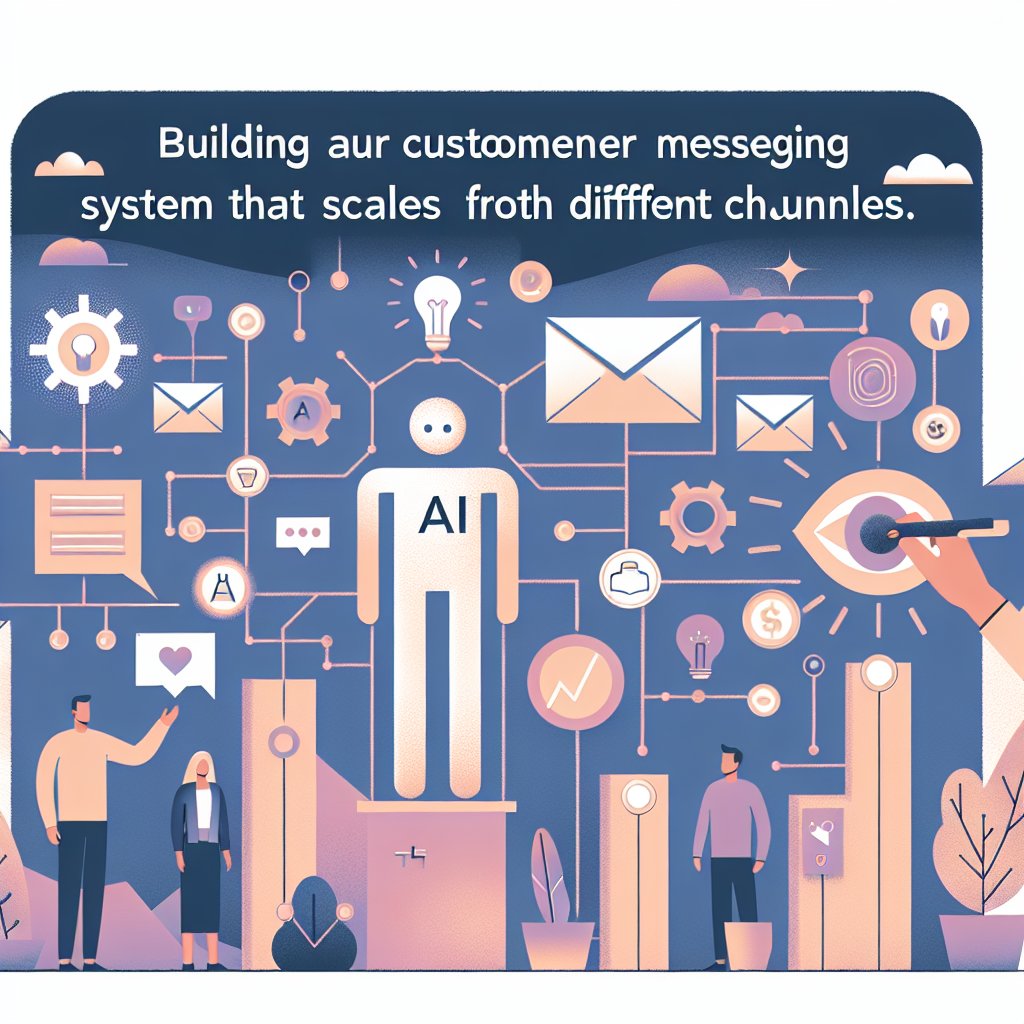
Great customer messaging is not a talent, it is an operating system. This guide shows how to design a repeatable Conversation Ops workflow with strategies, templates, and best practices that improve response quality, speed, and conversions across WhatsApp, Instagram, web chat, and more.
Most teams treat customer messaging like an art form: a few “good writers” handle the hard conversations, everyone else copies and pastes, and quality swings wildly depending on time of day. But messaging is closer to operations than creativity. If you want predictable results, you need a repeatable system: clear inputs, consistent decision rules, reusable templates, and feedback loops that improve over time.
Think of this as Conversation Ops, a practical approach to customer messaging that works across channels like WhatsApp, Instagram, Telegram, Facebook Messenger, and web chat. You will learn how to define goals, choose the right message structure, build a template library, and implement best practices that protect your brand voice while making it easier to respond quickly and move customers forward.
Before templates and tactics, define what success means in your conversations. In most businesses, messaging has four jobs:
If your messages do not reliably do these four things, you will see slow threads, repeated questions, and lost leads even if your product is strong.
Conversation Ops is a system that turns customer intent into the right response, the right next step, and the right internal action, every time.
To build it, you need:
Platforms like Staffono.ai are built for exactly this: 24/7 AI employees that can run your messaging operations across multiple channels, handle FAQs, qualify leads, book appointments, and escalate to a human when needed. The more structured your Conversation Ops is, the better automation performs.
Customers scan. Start with the answer or next step in the first line, then give supporting info.
Example: “Yes, we can deliver tomorrow. Please share your address and preferred time window, and I will confirm availability.”
Open-ended questions slow conversations and create ambiguity. Replace “What do you need?” with two or three options that map to your most common paths.
Example: “Which one fits best? A) Just pricing B) Book a demo C) Speak to a specialist”
When a message tries to answer, sell, and negotiate at once, customers ignore it. Keep each message focused: answer, then ask for one next action.
Customers disengage when they do not know how long something will take. Tell them the steps.
Example: “Two quick steps: 1) Choose a time 2) Share your email for the confirmation.”
Note: avoid plain text numbering if you prefer. You can still communicate steps in sentence form: “First choose a time, then share your email.”
Pricing, location, timing, and eligibility are the four constraints that cause most back-and-forth. Ask early, politely.
Example: “To recommend the right option, what is your monthly budget range and which city are you in?”
Use this simple structure for most customer messages:
Template: “Got it, you are looking for [X]. The best option is [Y] because [reason]. To proceed, please [single action]. If you prefer, I can also [alternative] and confirm within [time].”
This structure is ideal for automation because it is consistent. With Staffono.ai, you can implement structured responses that still sound human, while the AI employee pulls details like hours, pricing, availability, and policies from your knowledge base.
Goal: respond fast, identify intent, propose a next step.
Template: “Thanks for reaching out. What are you looking to solve right now: pricing, booking, or a quick recommendation? If you tell me your timeline and the best channel to confirm details, I will guide you.”
Goal: collect the few fields you truly need.
Template: “To make sure I recommend the right option, can you share: your location, your preferred date, and your rough budget range? Short answers are perfect.”
Goal: answer without forcing a long sales pitch.
Template: “Pricing depends on [main variable]. Most customers choose one of these: [Option A range], [Option B range], [Option C range]. If you tell me [1 detail], I will confirm the exact price and what is included.”
Goal: reduce back-and-forth.
Template: “I can book that for you. Which works better: morning or afternoon? Also, what is the best name and phone number for the confirmation?”
When you connect messaging to scheduling, the experience becomes seamless. Staffono.ai is designed to handle bookings in-chat and keep confirmations consistent across channels.
Goal: re-open the thread with a low-effort choice.
Template: “Quick check-in, do you want to: A) get a quote B) book a time C) pause for now? Reply A, B, or C and I will take it from there.”
Goal: de-risk complexity and propose a plan.
Template: “This is doable. To make it smooth, I suggest we do it in two parts: first confirm [critical detail], then choose [option]. What is your preference for [critical detail]?”
Goal: keep trust, set expectations, avoid dead ends.
Template: “I want to make sure this is handled correctly. I am looping in a specialist now. You will get a reply within [time]. Meanwhile, can you share [one key detail] so we can respond faster?”
WhatsApp and Instagram favor shorter messages. Web chat can handle more detail. The rule is constant: lead with the outcome and ask for one next step. Adjust length, not logic.
Customers screenshot pricing, policies, and confirmations. Make sure those messages are unambiguous: include what is included, what is excluded, and what happens next.
Personalization is not using a first name three times. It is referencing the customer’s context: their city, their goal, their time constraint, their last message.
Most brands drift into phrases that sound defensive or vague. Examples to avoid: “It depends” (without context), “As per our policy” (without empathy), “We cannot” (without offering alternatives). Replace them with specific next steps.
If pricing, hours, and policies live in five documents, your team will contradict itself. Create one knowledge base that templates pull from. This is also where AI automation shines: when Staffono.ai is connected to your up-to-date knowledge, it can deliver consistent answers 24/7 and reduce human error.
Conversation Ops gets stronger when you measure the right things. Track:
Then run small experiments: change one line in a template, adjust a question into a choice, or move the call-to-action earlier. The goal is compounding improvements, not one perfect script.
Review recent conversations and label them: pricing, booking, availability, refund, troubleshooting, comparison, and so on. Most businesses discover that a small set of intents covers most volume.
Use the Acknowledge-Answer-Action-Assurance structure. Keep it short, then add optional details as a second paragraph.
Define triggers for escalation: high-value leads, sensitive issues, angry tone, legal requests, or anything involving payment disputes. The rule should be explicit, not left to guesswork.
If your team is repeating the same steps all day, automation should carry the load. With Staffono.ai, you can deploy AI employees that handle FAQs, collect qualification details, send booking links, and maintain consistent tone across WhatsApp, Instagram, Telegram, Facebook Messenger, and web chat. Humans can then focus on exceptions and relationship-building.
When you treat messaging as operations, you stop relying on heroics. Your customers get faster answers, your team gets fewer repetitive tasks, and your pipeline moves with less friction. Start by defining intents, standardizing response patterns, and measuring what matters.
If you want to turn this into a working system quickly, Staffono.ai can help you operationalize your messaging across channels with 24/7 AI employees that qualify leads, handle bookings, and keep your customer experience consistent while you scale. You can explore how it fits your workflows at https://staffono.ai.