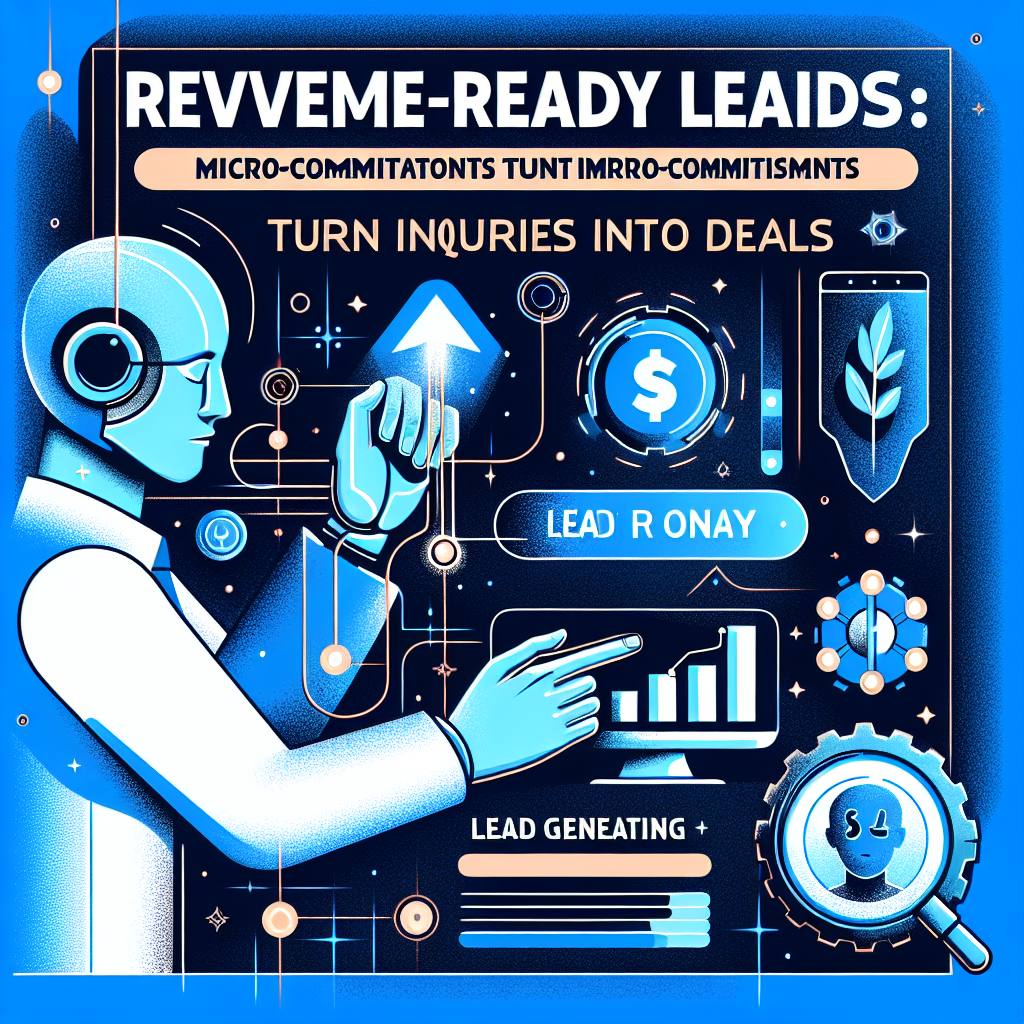


Most lead gen advice focuses on getting more traffic. Opportunity Mapping focuses on what happens after the click: how every message becomes structured data, a clear next step, and a measurable path to revenue. In this guide, you will learn tactics to capture leads in the moment, qualify them without friction, and convert faster using automation that still feels human.
Leads do not disappear because your offer is weak. They disappear because the next step is unclear, the response is late, or the conversation is not designed to collect the information needed to move forward. In modern markets, your pipeline is built inside chats: WhatsApp, Instagram DMs, Telegram, Facebook Messenger, and web chat. The teams that win do not just “answer fast” - they run a repeatable system that turns every inquiry into an opportunity record with context, urgency, and an explicit path to purchase.
This is where Opportunity Mapping comes in. It is a simple framework for designing the journey from first message to paid customer. The goal is not to make conversations robotic. The goal is to make them consistent, trackable, and conversion-friendly, especially when your volume grows and humans cannot be everywhere at once.
An opportunity map is a blueprint for how leads move through your messaging funnel. Instead of treating chats as “support,” you treat them as a sales surface where three things must happen:
When you map these steps, you can spot where leads stall, where information is missing, and where automation can remove delays. Platforms like Staffono.ai are built for this reality: AI employees that work 24/7 across messaging channels, capturing details, routing inquiries, and pushing conversations toward the next action.
Lead capture is not just “add a form.” It is designing entry points that match how people actually behave on mobile. A prospect sees an Instagram story, taps “Message,” asks one question, and expects immediate direction. If they must wait for business hours, they will often continue searching.
The best hooks are not vague. They invite a specific question and a specific outcome. Examples:
These hooks work because they promise speed and reduce uncertainty. They also make it easier to standardize the first reply, which is where automation shines.
The first reply should accomplish three things: confirm you understood the request, ask one easy question, and present the next step. A strong first response pattern looks like this:
With Staffono.ai, you can deploy AI employees to respond instantly on WhatsApp, Instagram, Telegram, Messenger, and web chat. That speed matters, but the bigger win is consistency: every lead gets the same high-quality opening that sets up qualification and conversion.
Many businesses “capture” leads as unstructured text in DMs. Later, someone scrolls through messages to find a phone number or requirement. Opportunity Mapping replaces that with intentional data collection: name, contact method, product interest, budget range, location, timeframe, and decision role. The trick is to ask for only what you need for the next step, not everything at once.
Practical tactic: build a two-step capture sequence. First, get a name and one qualifying detail. Second, ask for a phone number or email only when the prospect has received value (a quote range, availability confirmation, or a recommendation).
Qualification is not about interrogating people. It is about quickly understanding whether the lead is a match, and what kind of match. A good qualification system prevents two costly problems: chasing low-fit leads and mishandling high-intent leads.
Instead of a single “hot vs cold” label, segment by what the business must do next. Common segments include:
This segmentation should be driven by a small set of questions. For example, if you sell B2B services, you may only need company size, goal, and timeline. If you run local services, you may need location, urgency, and scope.
Open-ended questions slow chats down. Either-or questions create speed and clarity. Examples:
These questions feel natural and help your team (or your automation) route correctly.
Many leads are “interested” but stuck due to a constraint: budget, timing, authority, or requirements. If you uncover the constraint early, you can handle it directly. A simple pattern is:
When these are captured in the conversation, conversion becomes a guided process rather than a guessing game.
Conversion is rarely one leap. In messaging, it is a series of small commitments. The key is to always offer a next step that matches the lead’s intent level. If someone is browsing, a hard push for a call can backfire. If someone is ready, giving them a PDF to read can slow them down.
A practical conversion menu includes:
This gives prospects control while still guiding them forward. It also improves close rates because you are matching the ask to their readiness.
In chat, pricing is often the make-or-break moment. Two tactics reduce drop-off:
For example: “Most projects like this fall between $1,200 and $2,000. If you tell me the size and timeframe, I can narrow it to the best-fit option.” This keeps the conversation alive and invites the next answer.
If a prospect hesitates, do not end with “Let me know.” End with a scheduled next touch and a reason. Examples:
These prompts create commitment without pressure.
Imagine a home services business getting 40-80 inquiries per day across Instagram and WhatsApp. Before Opportunity Mapping, leads asked “How much?” and waited hours for a reply. Some were outside the service area. Others wanted urgent appointments but booked elsewhere while waiting. The team spent time copying details into spreadsheets.
After implementing an opportunity map, the first response collects location and service type, then instantly replies with a price range and next available times. High-intent leads get pushed to booking, low-fit leads are politely declined with a referral, and complex jobs get escalated to a human with the details summarized. With Staffono.ai, this can be run by AI employees across channels, 24/7, so leads are captured and qualified even when your team is offline.
Opportunity Mapping becomes powerful when you measure it. Focus on metrics that connect to revenue, not vanity counts:
When you see where the funnel breaks, you can adjust the script, the questions, the offer, or the routing logic.
Pick your highest volume channel (often WhatsApp or Instagram) and your most common inquiry type. Build a simple path: greeting, one qualifier, one value delivery (range, availability, recommendation), and one next step.
Avoid corporate phrasing. Use short sentences. Mirror the way customers write. Keep each message focused on one action.
Automation should handle repetitive steps: instant responses, collecting details, routing, reminders, and follow-ups. Humans should handle nuanced negotiation, exceptions, and relationship building. Staffono.ai is designed for exactly this split, with AI employees that can run your first mile and keep opportunities warm until a human steps in.
Lead generation works best when your sales motion is designed for real behavior: fast messaging, short attention, and constant comparison. Opportunity Mapping gives you a practical way to turn chats into a pipeline you can manage, measure, and improve.
If you want to capture more leads after-hours, qualify them consistently, and convert them with less manual work, it is worth exploring how Staffono.ai can act as a 24/7 front line across WhatsApp, Instagram, Telegram, Facebook Messenger, and web chat. When your messaging is always-on and structured, revenue becomes less dependent on who is online and more dependent on the system you built.