
AI moves fast, but most businesses do not fail because the models are weak, they fail because they cannot translate updates into repeatable execution. This guide breaks down current AI news signals, trends worth betting on, and a practical build approach that turns AI capability into reliable business automation.
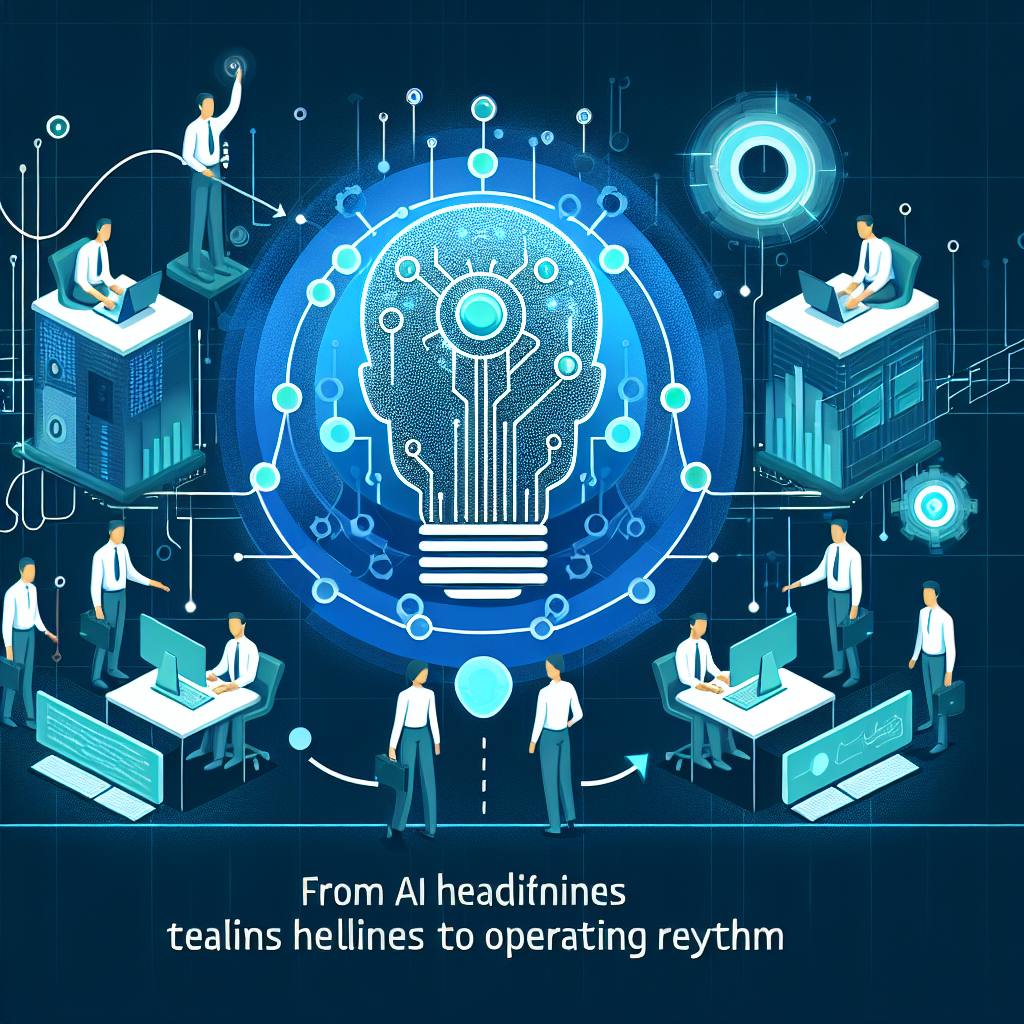
AI technology news can feel like a firehose: new model releases, new agent frameworks, new benchmarks, new safety debates, and a steady stream of “this changes everything” claims. The reality for builders and operators is simpler and harder: what matters is not whether a model is impressive in a demo, but whether your team can turn the constant change into an operating rhythm that delivers stable outcomes.
This article covers current AI news signals to watch, trends that are actually shaping product and operations, and practical steps to build with AI without betting the business on hype. Along the way, we will use messaging and revenue workflows as examples, because that is where AI can create immediate leverage, especially when it runs 24/7 across channels.
Most AI announcements bundle three different messages: capability, cost, and control. When you read AI news, sort it into these buckets so you can decide what to test and what to ignore.
For example, a flashy benchmark win is only useful if it changes one of those three realities for your use case. A model that is 10 percent “smarter” but 3x more expensive might not move the needle for high-volume messaging. Meanwhile, a modest improvement in tool-use reliability can unlock real automation, because it reduces the need for human backstops.
Rather than predicting which model will “win,” focus on trends that shift how teams build and deploy.
Many businesses do not need frontier-level general intelligence. They need consistent behavior in narrow workflows: qualify a lead, schedule a booking, answer policy questions, collect missing information, or route a request to the right team. Smaller models, optionally fine-tuned or guided by strong retrieval, often deliver better cost and latency profiles.
In a messaging business, latency is not a technical metric, it is a conversion lever. Replies that arrive in seconds keep prospects engaged. This is one reason platforms like Staffono.ai focus on operational automation: AI employees must respond quickly and consistently across WhatsApp, Instagram, Telegram, Facebook Messenger, and web chat, not just generate impressive text.
The industry is moving from “an AI that talks” to “an AI that does.” That means tool calls: checking availability, creating a booking, updating a CRM record, issuing an invoice link, or escalating a case with a structured summary. The key trend is not the framework of the week, it is the rise of tool contracts and structured outputs that software can trust.
Practically, this means your prompts are not the product. Your workflow is the product. The model is just one component that must be evaluated like any other dependency.
As model capabilities converge, the winning systems are those that have the right information at the right moment. Retrieval-augmented generation (RAG) is still evolving, but the main lesson is stable: if your knowledge base is messy, your AI will be confidently wrong. If your policies and product data are clean and structured, your AI becomes predictably helpful.
For customer communication, this is especially important. If your AI can quote the right pricing, eligibility rules, and time windows, it can safely handle the majority of inquiries. Staffono.ai deployments often start here: connect the business’s FAQs, services, pricing, and scheduling rules so the AI employee can answer and act, not just chat.
Teams are learning that “it seems fine” is not a quality strategy. AI systems need continuous evaluation: sampled conversations, automated checks for policy compliance, hallucination rates, and task completion rates. The trend is toward lightweight, always-on evaluation loops that run like monitoring for traditional software.
If you want AI to produce reliable outcomes, design for constraints. Here is a pragmatic approach that works for most teams.
Pick a workflow where success is clear. Examples:
Define a small set of metrics: response time, completion rate, handoff rate, conversion rate, and customer satisfaction. These become your “operating rhythm” metrics.
High-performing AI messaging flows follow a pattern:
Example: a clinic lead messages on Instagram asking about “teeth whitening price.” A good AI flow does not dump a long answer. It gives a concise price range (from the knowledge base), asks one question (in-office vs at-home), then offers available slots and books. That is a revenue workflow, not just customer service.
Whenever the AI needs to update a CRM, create a booking, or tag a lead, require structured outputs (for example JSON internally, or a fixed schema in your platform). This reduces errors and makes behavior testable.
Tools like Staffono.ai are valuable here because the “AI employee” is designed to operate within business rules and multi-channel messaging constraints, and to connect the conversation to operational actions such as bookings and lead routing. You are not reinventing the infrastructure for channel handling, response orchestration, and business-hours logic.
Not every workflow needs the same level of control. A safe approach is to assign risk tiers:
The trend in AI product design is not “make the AI smarter,” it is “make the system safer by default.” For messaging automation, that usually means the AI can handle 80 percent of routine traffic and confidently route the remaining 20 percent to a human with a summarized context.
Scenario: A home services company gets 40 to 100 WhatsApp messages per day. Most are “How much?” and “Are you available?” The team loses leads because response times vary.
Implementation plan:
With Staffono.ai, this can run as a 24/7 AI employee across channels, so a late-night inquiry is still captured, qualified, and followed up automatically, instead of waiting until morning.
Scenario: A salon books via Instagram DMs and web chat, but staff forget to confirm appointments and clients forget to show.
Implementation plan:
AI does not just “answer faster,” it runs the follow-through steps that humans often miss. This is where automation creates compounding gains.
Scenario: An ecommerce brand gets repetitive questions about shipping, returns, and sizing, mixed with high-value issues like damaged items.
Implementation plan:
This rhythm keeps your AI system aligned with reality: customers, channels, and operational constraints.
The near-term direction of AI technology is clear: more autonomy in narrow workflows, more tool use, and more pressure to prove outcomes. Teams that win will treat AI as a production system with monitoring, testing, and clear ownership, not a magical layer of text generation.
If you want to move from experimentation to dependable automation in customer communication, Staffono.ai is built for that operational reality. You can deploy AI employees that handle conversations, bookings, and sales across your messaging channels, then iterate with measurable performance. Explore Staffono.ai to see how a messaging-first AI automation stack can turn AI news into business results, day after day.