
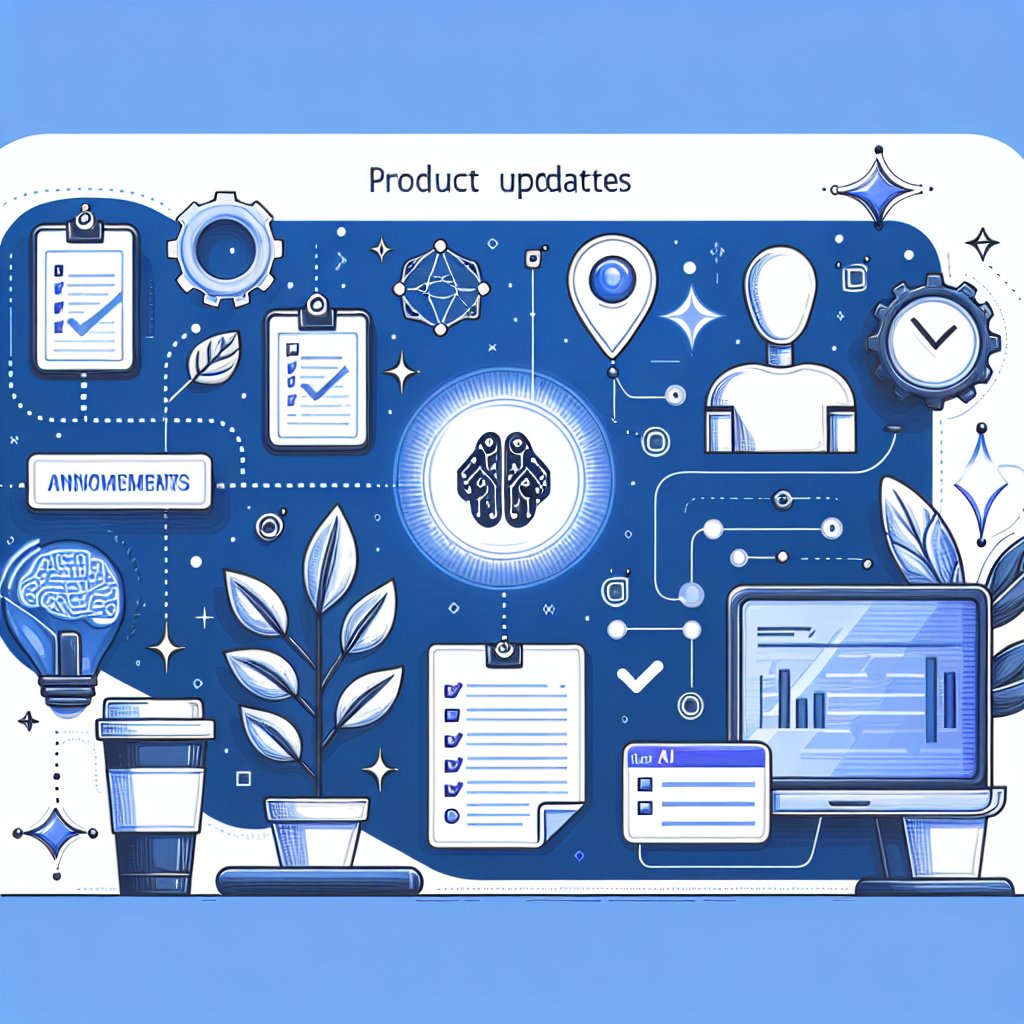
Product updates are not just release notes, they are signals of where your business is going next. In this post, we break down what meaningful updates look like, why they matter for growth, and how to turn improvements into better customer communication, lead generation, and sales outcomes.
Product updates are easy to treat as a routine: a short announcement, a list of fixes, and a quick post on social media. But in fast-moving markets, updates are strategy in disguise. They reveal what your customers struggle with, what your team cannot scale manually, and what your competitors are trying to copy. The best updates are not about adding more buttons. They are about removing friction from the customer journey, improving reliability, and unlocking measurable growth.
This article is a practical guide to understanding announcements, improvements, and new features: what changed, why it changed, and how to communicate updates in a way that drives adoption. We will also connect these principles to real-world automation use cases, including how platforms like Staffono.ai (https://staffono.ai) help businesses operationalize updates across messaging, bookings, and sales conversations.
Customers do not buy features, they buy outcomes. A product update matters when it improves one of these outcomes:
In automation and AI products, the “why” behind an update typically falls into three categories: scaling operations, increasing accuracy, or improving customer experience. If you can tie each release to at least one metric, your updates become a growth engine rather than a maintenance chore.
Announcements are about clarity. They can include roadmap direction, pricing changes, new integrations, or policy updates. The best announcements answer three questions:
When announcements are handled well, they reduce support tickets and prevent churn. When handled poorly, they create fear and “wait and see” behavior. In messaging and customer communication, uncertainty is expensive because it slows down response times and decision-making.
Improvements often look small, but they can have outsized impact: better search, faster load times, more accurate AI responses, or smoother handoff to human agents. Improvements are where product teams win trust because they show you are listening.
A common mistake is to publish improvements as a long list of micro-fixes without context. Instead, group them by customer outcome, such as “faster lead response,” “better visibility for managers,” or “more consistent messaging across channels.”
New features should solve new problems or solve old problems in a fundamentally better way. They require onboarding, documentation, and adoption support. The most successful feature releases include:
For AI automation, guardrails matter even more. If a new AI capability changes how conversations are handled, customers need visibility and control: what the AI will say, when it will escalate, and how results are measured.
Across AI-powered platforms, the most meaningful product updates tend to cluster around a few themes. If you are planning your own update strategy, these are the areas that most consistently improve business outcomes.
Customers move between WhatsApp, Instagram, Telegram, Facebook Messenger, and web chat depending on what is convenient. A major “what changed” trend is unifying conversation context across channels so customers do not have to repeat themselves.
Staffono.ai is built around this reality: businesses can deploy 24/7 AI employees to handle customer communication across multiple messaging channels, while keeping responses consistent and on-brand. A common improvement here is better intent recognition so the AI understands the same request even if it is phrased differently on different platforms.
Lead generation updates often focus on turning conversations into structured data: capturing name, intent, budget range, location, preferred time, and urgency. The “why” is simple: sales teams cannot scale if every lead arrives as unstructured chat text.
Actionable insight: define a lead qualification checklist and map it to your conversation flow. For example, if you run a service business, your AI should reliably capture service type, address, preferred date, and any constraints before booking or escalating to a human.
Booking-related updates are usually aimed at reducing operational overhead and increasing attendance rates. Examples include automated reminders, rescheduling flows, time zone handling, and confirmation messages with clear next steps.
When a platform like Staffono.ai handles bookings through chat, improvements often include more resilient calendar logic and better edge-case handling, such as what happens when a slot becomes unavailable mid-conversation. These small reliability upgrades are often the difference between “nice demo” and “real operational tool.”
Sales automation updates are most valuable when they reduce repetitive work: answering pricing questions, sharing product details, recommending next steps, and routing hot leads. The “why” is usually to increase conversion speed, especially outside working hours.
Practical example: a lead messages your Instagram page at 11:30 PM asking for pricing and availability. Without automation, they wait until morning and may choose a competitor. With a 24/7 AI employee, you can answer instantly, qualify the lead, and offer a booking link or schedule a call, then hand off to a human rep with full context.
When you look at product updates through a business lens, most changes are driven by one of the following forces:
A helpful internal exercise is to attach a “driver tag” to each update. This makes it easier to prioritize, communicate, and measure impact. It also helps marketing and sales teams explain why the update matters in plain business language.
Instead of “We added advanced routing,” say “Your leads now reach the right person faster, which reduces response time and increases conversions.” Outcome framing is especially important for AI features, where users may be skeptical or unsure what changed.
Include one example for each major persona. For instance:
New features need short, clear onboarding: a checklist, a quick video, or a guided setup. Improvements need a short “what’s different” note so users do not miss the benefit.
Define success metrics before release. For AI automation, common metrics include:
If you are using Staffono.ai, you can align these metrics with the workflows your AI employees manage, then iterate based on real conversation outcomes rather than assumptions.
The strongest teams treat product updates as compounding improvements: each release reduces friction, increases trust, and makes the next release easier to adopt. In AI and automation, that compounding effect is powerful because every improvement can unlock more volume without adding headcount.
If your business is managing high message volume, inconsistent response times, or missed leads across WhatsApp, Instagram, Telegram, Facebook Messenger, and web chat, it may be time to systematize how updates translate into operational results. Staffono.ai (https://staffono.ai) helps you deploy 24/7 AI employees that handle customer communication, lead qualification, bookings, and sales conversations across channels, so the benefits of your process and product improvements show up immediately in the customer experience. If you want to see what changed when automation is done right, exploring Staffono can be a practical next step.