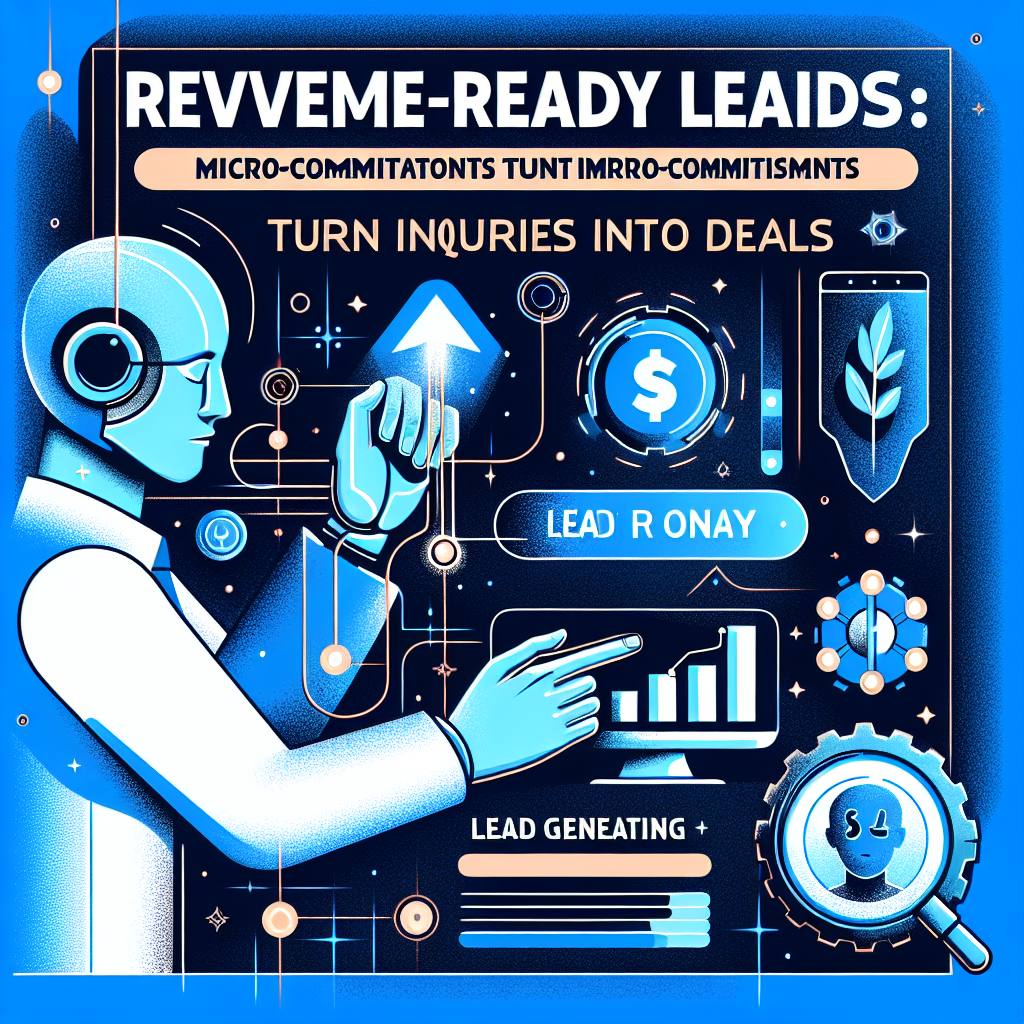


Most lead gen advice focuses on getting more inquiries, but revenue comes from managing conversations that reveal intent fast. This guide shows how to capture leads across channels, qualify them without friction, and convert with a clear next step, using practical scripts, examples, and automation ideas.
Leads rarely fail because you did not “get enough.” They fail because the conversation loses shape: the prospect asks a question, you answer, and then nothing moves forward. The fastest path to revenue is not louder marketing, it is a repeatable way to turn every inquiry into a high-intent conversation that ends in a booking, deposit, or signed agreement.
This article breaks the system into three parts: capture (where leads come from and how you collect them), qualification (how you identify fit and urgency), and conversion (how you move the deal forward without sounding pushy). The focus is messaging-first, because buyers increasingly start in WhatsApp, Instagram DMs, web chat, Telegram, and Facebook Messenger, then decide whether you deserve a call.
Capture is not just traffic. Capture is removing the micro-friction between interest and first contact. A lead is most motivated at the moment they click, tap, or reply. Your job is to make the next action obvious and immediate.
For many businesses, the best capture mix is not a single form. It is a “message anywhere” approach:
Staffono.ai (https://staffono.ai) is designed for this reality: it can act as a 24/7 AI employee across WhatsApp, Instagram, Telegram, Facebook Messenger, and web chat, so you do not lose leads when your team is offline or busy.
People do not message because you said “Contact us.” They message because the first step feels safe, specific, and useful. Strong conversation starters include:
These prompts work because they promise a concrete outcome. They also set up qualification naturally.
The most common capture mistake is replying with information and no next step. Instead of “Yes, we do that,” use a two-part reply: value plus direction.
Example (home services): “Yes, we handle AC installation. To confirm the right unit and price range, what is the room size and your location? If you share a photo of the existing setup, I can be more accurate.”
Notice what happens: you answered, then asked for the minimum details that move the conversation forward.
Qualification is not a checklist. It is a short sequence that reveals whether the lead has a real problem, a realistic budget, and a timeframe you can serve. The goal is clarity, not pressure.
In messaging, you can qualify quickly by listening for three signals:
Example questions that do not feel salesy:
People happily answer questions when it feels like you are tailoring the solution. A simple pattern is: ask, reflect, recommend.
Example (B2B SaaS): “Got it, you want to reduce no-shows and automate reminders. If you are handling 50+ appointments per week, the best starting point is an automated confirmation flow plus a reschedule option. How many bookings do you average weekly?”
This keeps the conversation consultative while still gathering key data.
Once you know what “good fit” looks like, codify it. Create routing rules such as:
Tools like Staffono.ai can support this by collecting details through natural conversation, tagging leads by intent, and handing off the hottest opportunities to your team while continuing to nurture the rest.
Conversion is the art of making the next step smaller than the buyer’s hesitation. You do not need to “close hard.” You need a sequence of micro-commitments that culminate in a paid step.
When you only offer “Book a call,” you lose people who want to browse quietly. Provide two options that both move forward:
This reduces resistance and keeps control of the process.
Most buyers hesitate in predictable places: price, risk, and timeline. Prepare “proof snippets” you can paste quickly:
Proof is strongest when it is contextual. A single relevant example beats a generic “We are the best.”
Revenue requires a transaction, so remove obstacles:
If your business sells appointments, demos, or consultations, Staffono.ai can manage booking conversations end-to-end, including answering common questions, collecting details, and confirming the next step even at 2 a.m.
Goal: Turn a DM into a booked appointment.
Revenue safeguard: If the lead goes quiet, follow up with a choice: “Do you want the earliest slot, or should I hold a time next week?”
Goal: Turn an inquiry into a qualified meeting with decision makers.
Revenue safeguard: If they want price first, respond with a range and a condition: “Typical projects are $X to $Y depending on volume and integrations. If you answer two quick questions, I can narrow it.”
You do not need a complicated dashboard. Track a small set of metrics weekly:
When you improve the next-step rate, revenue follows. When you improve show rate, your calendar becomes predictable.
This is where an AI employee model is practical: with Staffono.ai, the first layer of conversation can be consistent, fast, and helpful across every channel, while your team focuses on high-value calls and proposals.
Capturing, qualifying, and converting is not a talent, it is a design problem. Create strong conversation starters, ask for the minimum details that reveal intent, and always offer a clear next step. Once the flow works, scale it across channels and hours.
If you want to turn more chats into booked calls and paid orders without hiring a night shift, Staffono.ai (https://staffono.ai) can run those first-touch conversations 24/7, qualify leads in real time, and route the best opportunities to your team so revenue does not depend on someone being online at the perfect moment.